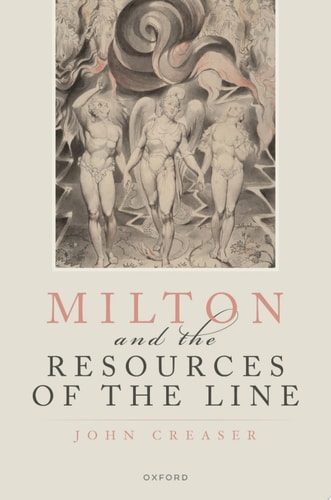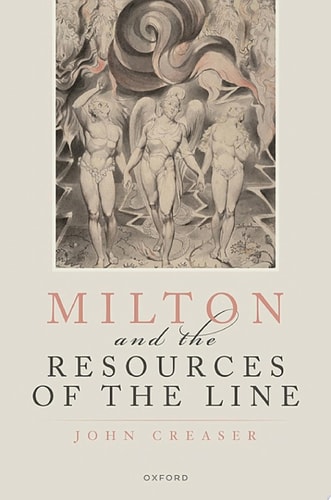
Milton and the Resources of the Line
0
0
As an Amazon Associate and affiliate partner, Menrva Books earns from qualifying purchases. Learn more
Author Description
This book will change how readers read not only Milton but any poetry. Whereas prose is written in sentences, poetry is written in lines, lines that may or may not coincide with the syntax of the sentence. Lines add an aural and visual mode of punctuation, with some degree of pause and weight at the line-turn. So lineation, the division of poetry into lines, opens a repertoire of possibilities to the poet. Notably, it encourages an enhanced concentration on meaning, rhythm, and sound. It makes metrical patterns possible, with interactions between regularity and deviation; or it makes possible the presence or absence of structural rhyme; or the multiple variations of the line-turn, whether in harmony with syntax or overflowing, in ways that may be either more or less conspicuous. Starting from theories of Derek Attridge, this book develops new methods for exploring the expressive resources of the verse line as exploited by the greatest of English poets, John Milton. Topics examined include: the interaction of strictness and freedom in the rhythms of Milton's line and paragraph; the interfusion of diverse prosodies in a single poem; approaches to free verse; rhyme in the earlier lyric verse and modes of near-rhyme in the later blank verse; the diverse modes of onomatopoeia; and the complex interweavings of prosody and ideology in this very political poet. The great themes and issues and characters of Milton's innovative and always controversial poetry are perceived afresh, being approached intimately through the rich possibilities of the line, and the insights of the approach illuminate the reading of any poetry.
Menrva's Summary
THE THESIS
This book investigates how the structural mechanics of lineation in poetry, specifically within the works of John Milton, function as a primary resource for meaning, rhythm, and sound. John Creaser, a scholar of English literature, utilizes the theoretical framework established by Derek Attridge to analyze the interplay between syntax and verse structure. By examining the tension between metrical regularity and deviation, the author argues that the line-turn serves as a critical tool for poets to manipulate reader perception and emphasize thematic content. The text provides a systematic methodology for evaluating how prosodic choices reflect and reinforce the ideological underpinnings of Milton's poetry.
THE SCOPE MAP
What You Will Find
- Analysis of the interaction between strictness and freedom in Miltonic verse paragraphs
- Examination of diverse prosodies, including blank verse and near-rhyme
- Exploration of onomatopoeia and its role in poetic expression
- Theoretical application of Derek Attridge’s prosodic models
Scope Limits
- The analysis is primarily focused on the works of John Milton rather than a comprehensive survey of all English poetry
- The text does not provide a general history of English prosody outside the context of Milton’s specific innovations
THE AUTHORITY PERSPECTIVE
Scholars and students of Milton frequently cite this work as a rigorous technical examination of prosodic mechanics. The text is noted for its academic density and its ability to bridge the gap between formalist analysis and ideological interpretation.
Page Count:
672
Publication Date:
2022-01-01
Publisher:
OUP Oxford
ISBN-10:
0192679295
ISBN-13:
9780192679291
History
Prosody
Academic
English literature
Literary Criticism
Indigenous