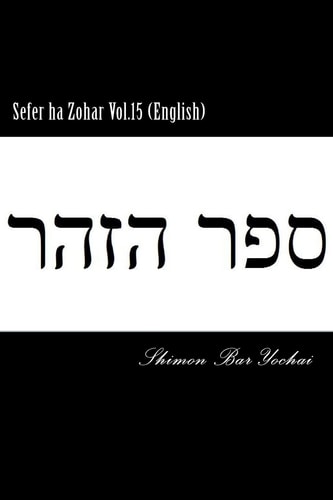
Yanuka: Child Prodigy. The Holy Zohar
0
0
As an Amazon Associate and affiliate partner, Menrva Books earns from qualifying purchases. Learn more
Author Description
The Yanuka. Messianic Prophecy. Child Prodigy in the Holy Zohar. Shimon bar Yochai (Zoharic Aramaic: שמעון בר יוחאי, Shim'on bar Yoḥai) or Shimon ben Yochai (Mishnaic Hebrew: שמעון בן יוחאי, Shim'on ben Yoḥai), also known by the acronym Rashbi, was a 2nd-century tannaitic sage in ancient Judea, said to be active after the destruction of the Second Temple in 70 CE. He was one of the most eminent disciples of Rabbi Akiva. The Zohar, a 13th century foundational work of Kabbalah, is ascribed to him by Qabbalistic tradition, but this claim is universally rejected by scholars. In addition, the important legal works called Sifre and Mekhilta are attributed to him (not to be confused with the Mekhilta of Rabbi Ishmael, of which much of the text is the same). In the Mishnah, where he is the fourth-most mentioned sage, he is referred to as simply "Rabbi Shimon" (except Hagigah 1:7 and Avot 6:8). In the baraita, midrash and gemara his name occurs either as Shimon or as Shimon ben Yochai.
Menrva's Summary
THE THESIS
This book explores the figure of Shimon bar Yohai, a prominent 2nd-century sage, and his association with the Zohar, a foundational text of Kabbalah. It delves into his historical context, his discipleship under Rabbi Akiva, and the traditional attribution of the Zohar to him, while also noting scholarly skepticism regarding this claim. The work examines other important legal texts attributed to him, such as Sifre and Mekhilta, and his frequent mention in the Mishnah as 'Rabbi Shimon'.
THE SCOPE MAP
- Biographical details of Rabbi Shimon Bar Yohai, a 2nd-century tannaitic sage.
- The historical context of Judea after the destruction of the Second Temple.
- The Zohar: its significance in Kabbalah and traditional attribution to Shimon bar Yohai.
- Scholarly perspectives on the authorship of the Zohar.
- Attribution of legal works like Sifre and Mekhilta to Rabbi Shimon.
- References to Rabbi Shimon in the Mishnah and other rabbinic literature.
THE AUTHORITY PERSPECTIVE
This work appears to be an academic or religious study focusing on a significant figure in Jewish tradition and mysticism. The subject matter suggests a deep dive into historical texts and theological interpretations, likely appealing to scholars of religion, Jewish history, and Kabbalah. The inclusion of both traditional attributions and scholarly skepticism indicates a balanced approach to the material. The book's focus on primary texts and historical figures points to a dense, informative read for those interested in the origins of Kabbalistic thought.
Page Count:
110
Publication Date:
2022-11-25
Publisher:
Independently published
ISBN-13:
9798365608221
History
Biography
Non-Fiction
Jewish Mysticism
Kabbalah
Religious Texts
Community Tags
Similar Books