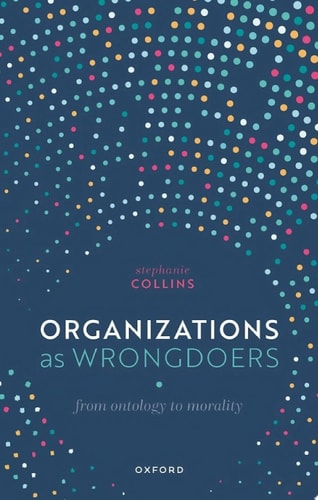
Organizations as Wrongdoers: From Ontology to Morality
0
0
As an Amazon Associate and affiliate partner, Menrva Books earns from qualifying purchases. Learn more
Author Description
Organizations do moral wrong. States pursue unjust wars, businesses avoid tax, charities misdirect funds. Our social, political, and legal responses require guidance. We need to know what we're responding to and how we should respond to it. We need a metaphysical and moral theory of wrongful organizations. This book provides a new such theory, paying particular attention to questions that have been underexplored in existing debates. These questions include: where are organizations located as material objects in the natural world? What's the metaphysical relation between organizations and their members? Can organizations be blameworthy for attitudes and character traits, as well as for actions? What about feelings of guilt, remorse, and shame-can organizations feel these emotions and why does this matter? How and why are members implicated in organizations' wrongs? How should organizations' reparative costs be apportioned among members? The book provides provocative answers to these questions. It argues that organizations are material objects with humans as material parts - much like how a pizza is a material object with slices as material parts. This picture helps us make sense of organizations' blameworthiness, including blame for organization-level actions, attitudes, and character traits. What's more, organizations can experience moral self-awareness - a crucial component of guilt, remorse, and shame. Members can be implicated in organizations' actions in numerous ways - and, it is argued, members' level of implication should determine their share of organizations' reparative burdens.
Menrva's Summary
THE THESIS
This book investigates the ontological status and moral culpability of organizations to determine how society should respond to institutional wrongdoing. Stephanie Collins, a scholar in political and social philosophy, constructs a metaphysical framework that treats organizations as material objects composed of human parts. By applying this model, she argues that organizations possess the capacity for moral self-awareness and blameworthiness, providing a systematic approach to assigning reparative burdens among members.
THE SCOPE MAP
What You Will Find
- A materialist ontology defining the relationship between organizations and their constituent members.
- An analysis of organizational moral agency, including attitudes, character traits, and emotions like guilt and shame.
- A normative framework for distributing reparative costs based on individual member implication.
Scope Limits
- The text focuses primarily on the philosophical and metaphysical foundations of organizational wrongdoing rather than providing a legal handbook or specific policy manual for corporate litigation.
THE AUTHORITY PERSPECTIVE
Scholars in the field of social ontology and ethics view this work as a rigorous contribution to the debate on collective agency. Readers frequently note the high level of philosophical density in the prose, making it a significant text for advanced students and researchers interested in the intersection of metaphysics and moral responsibility.
Page Count:
336
Publication Date:
2023-01-01
Publisher:
OUP Oxford
ISBN-10:
0192697714
ISBN-13:
9780192697714
Philosophy
Metaphysics
Ethics
Organizational Theory
Social Philosophy
Community Tags
Similar Books