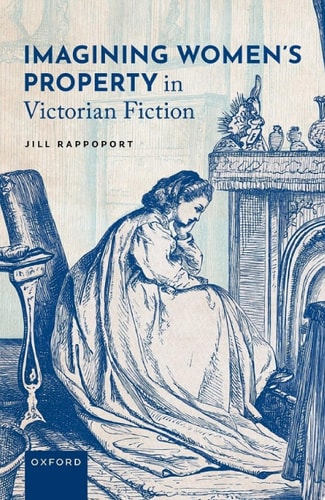
Imagining Women's Property in Victorian Fiction
0
0
As an Amazon Associate and affiliate partner, Menrva Books earns from qualifying purchases. Learn more
Author Description
Imagining Women's Property in Victorian Fiction reframes how we think about Victorian women's changing economic rights and their representation in nineteenth-century novels. The reform of married women's property law between 1856 and 1882 constituted one of the largest economic transformations England had ever seen, as well as one of its most significant challenges to family traditions. By the end of this period, women who had once lost their common-law property rights to their husbands reclaimed their own assets, regained economic agency, and forever altered the legal and theoretical nature of wedlock by doing so. Yet in literary accounts, reforms were neither as decisive as the law implied nor limited to marriage. Legal rights frequently clashed with other family claims, and the reallocation of wealth affected far more than spouses or the marital state. Competition between wives and children is just one of many ways in which Victorian fiction suggests the perceived benefits and threats of property reform. In nineteenth-century fiction, portrayals of women's claims to ownership provide insight into the social networks forged through property transactions and also offer a lens to examine a wide range of other social matters, including testamentary practices, wills, and copyright law; economic and evolutionary models of mutuality; the twin dangers of greed and generosity; inheritance and custody rights; the economic ramifications of loyalty and family obligation; and the legacy of nineteenth-century economic practices for women today. Understanding the reform of married women's property as both an ideologically and materially substantial redistribution of the nation's wealth as well as one complicated by competing cultural traditions, this book explores the widespread ways in which women's financial agency was imagined by fiction that engages with but also diverges from the law in accounts of economic choices and transactions. Repeatedly, narratives by Austen, Dicken
Menrva's Summary
THE THESIS
This book investigates how Victorian novels both reflected and challenged the legal reforms regarding married women's property rights between 1856 and 1882. Jill Rappoport, an academic scholar, utilizes a synthesis of legal history and literary analysis to argue that the reallocation of wealth was a complex cultural process that extended far beyond simple marital status. She examines how fiction portrays the tension between emerging legal rights and traditional family obligations, suggesting that literature provided a unique space to explore the social and economic consequences of these reforms.
THE SCOPE MAP
What You Will Find
- Analysis of the Married Women's Property Acts and their impact on nineteenth-century social structures.
- Examination of literary representations of inheritance, wills, and copyright law.
- Exploration of economic models of mutuality and the conflict between individual agency and family loyalty.
Scope Limits
- The study focuses primarily on British literature and legal history, excluding comparative international legal frameworks.
- The analysis does not provide a comprehensive history of all Victorian economic policy, focusing instead on the intersection of property and gender.
THE AUTHORITY PERSPECTIVE
Scholars in the field of Victorian studies recognize this work as a significant contribution to the understanding of how economic law and narrative fiction intersect. Readers frequently note the academic density of the prose and the author's meticulous attention to the nuances of nineteenth-century legal and social history.
Page Count:
225
Publication Date:
2023-01-01
Publisher:
OUP Oxford
ISBN-10:
0192692860
ISBN-13:
9780192692863
English & College Success
Victorian
English literature
Gender Studies
English
Womens Studies
Legal History
Literary Criticism
Economic History
Community Tags
Other Editions(2)
Similar Books


Reader Comments
Share Your Thoughts
No comments yet. Be the first to share your thoughts!