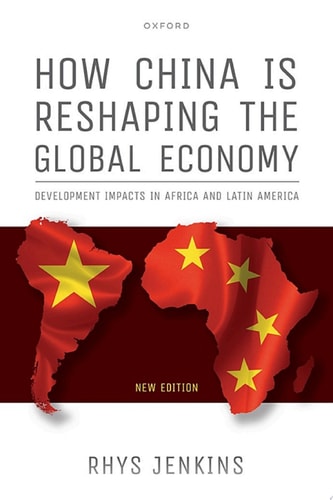
How China is Reshaping the Global Economy: Development Impacts in Africa and Latin America
0
0
As an Amazon Associate and affiliate partner, Menrva Books earns from qualifying purchases. Learn more
Author Description
China's growing economic involvement in Sub-Saharan Africa and Latin America has been a source of major controversy. The official Chinese position maintains that the growth of bilateral relations is of mutual benefit and provides a good example of South-South cooperation. Critics on the other hand see the economic relations between China and other developing countries as highly unequal with most of the benefits accruing to China and a few local elites. They also point to negative socio-economic, political, and environmental consequences. How China is Reshaping the Global Economy: Development Impacts in Africa and Latin-America throws more light on these controversies through a comparative study of China's impact on the two regions. It looks not just at bilateral relations between China and the two regions but also analyses the changes in the global economy brought about as a result of the shift in economic activity from North America and Western Europe to Asia. This book looks at the factors which led to rapid economic growth in China and the way in which this has affected global manufacturing, commodity markets, the international presence of Chinese companies, and financial glows. It examines the different forms of Chinese economic involvement in Sub-Saharan Africa and Latin America, the main drivers, and economic, social, political, and environmental consequences. It ends with a comparison of the two regions that highlights the importance of different histories and political and institutional contexts in determining the impacts of China. Since the first edition of How China is Reshaping the Global Economy: Development Impacts in Africa and Latin-America, China's role in the global economy has continued to expand and the Chinese government's foreign policy has become more assertive. The global presence of China has been marked by the expansion of the Belt and Road Initiative to almost 150 countries and the trade-war between the US and China, as well as increased We
Menrva's Summary
THE THESIS
This book investigates the multifaceted economic, social, and environmental impacts of China's expanding global influence on developing nations in Sub-Saharan Africa and Latin America. Rhys Jenkins, a specialist in development economics, utilizes a comparative framework to analyze how the shift of economic power from the Global North to Asia alters international trade, commodity markets, and financial flows. The text evaluates whether these bilateral relations foster mutual development or perpetuate unequal power dynamics between China and its partners.
THE SCOPE MAP
What You Will Find
- Comparative analysis of Chinese economic involvement in Sub-Saharan Africa versus Latin America
- Examination of the Belt and Road Initiative and its global reach
- Assessment of impacts on global manufacturing and commodity markets
- Analysis of the political and institutional factors shaping regional outcomes
Scope Limits
- Does not provide an exhaustive country-by-country audit of every Chinese investment project
- Focuses primarily on macroeconomic and structural impacts rather than micro-level corporate case studies
THE AUTHORITY PERSPECTIVE
Experts recognize this text as a rigorous comparative study that effectively balances broad economic theory with regional political realities. Readers frequently note the academic density of the prose, making it a valuable resource for students and policy analysts interested in the complexities of South-South cooperation.
Page Count:
710
Publication Date:
2022-01-01
Publisher:
OUP Oxford
ISBN-10:
0192691406
ISBN-13:
9780192691408
Economics
China Studies
International relations
American Studies
Community Tags
Other Editions(3)
Similar Books







Reader Comments
Share Your Thoughts
No comments yet. Be the first to share your thoughts!