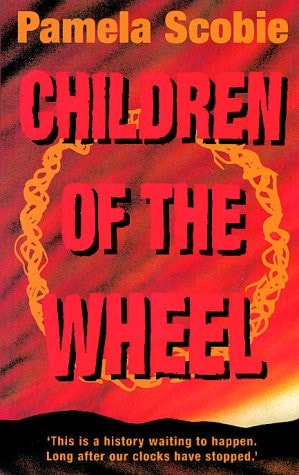
Children of the Wheel
0
0
As an Amazon Associate and affiliate partner, Menrva Books earns from qualifying purchases. Learn more
Author Description
Thousands of years into the future, the human race has been reduced to scattered tribes living a primitive life in hostile isolation from each other. Surplus children are driven into the wilderness and have to learn to survive, with only very primitive tools and hardly any food.This is the story of a young girl, Cyndra, who is cast out by her father into a world of fear and violence. Living at the mercy of a savage tribe, she vows to escape with her friends over the desert. She struggles to invent something to transport food and water over the harsh and bitter land, untilat last she has an idea, an idea which no one has thought of for thousands of years...
Menrva's Summary
THE PULSE
Cast out by her father into a hostile wilderness, a young girl named Cyndra must navigate a landscape of fear and violence to secure her survival. Cyndra is one of many children abandoned by their tribes in a future where humanity has regressed to primitive, isolated groups. She faces the constant threat of a savage tribe while attempting to lead her friends across a barren desert. The narrative follows her struggle to innovate and create tools, specifically a means of transport, to overcome the harsh environmental constraints of her world.
INSIDE THE PAGES
- Post-apocalyptic setting featuring a regressed human society
- Survival-focused narrative arc
- Exploration of technological rediscovery
- Third-person limited perspective
- Focus on resource scarcity and environmental hazards
- Character-driven development through adversity
- Themes of ingenuity and social isolation
- Linear progression of the escape attempt
THE COLLECTIVE ECHO
Readers often focus on the stark contrast between the primitive conditions of the characters and the remnants of a forgotten high-tech past. The pacing is frequently described as steady, emphasizing the physical toll of the desert environment on the protagonists. Discussion centers on the central metaphor of the wheel as a symbol of human progress and the loss of knowledge over time. Critics highlight the author's focus on the mechanics of survival rather than complex political intrigue. The narrative effectively maintains a sense of urgency as the characters attempt to overcome their limited resources.
Page Count:
222
Publication Date:
1995-11-02
Publisher:
Oxford University Press
ISBN-10:
019271662X
ISBN-13:
9780192716620
Adventure
Science Fiction
Fantasy
Dystopian
Post-Apocalyptic
Survival
Community Tags
Similar Books