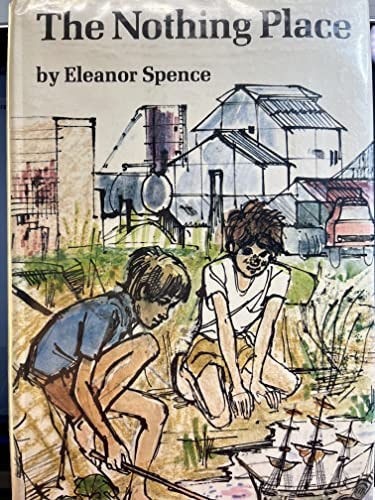
The Nothing-Place
0
0
As an Amazon Associate and affiliate partner, Menrva Books earns from qualifying purchases. Learn more
Author Description
Learning to accept his partial deafness is bad enough, but having to adjust to a new neighborhood and a bunch of do-good friends is almost too much for Glen.
Menrva's Summary
THE PULSE
Glen struggles to reconcile his internal sense of self with the external pressures of a new environment and his partial deafness. After moving to a new neighborhood, Glen finds himself navigating the complexities of social integration while managing the physical and emotional realities of his hearing impairment. He faces resistance from within, viewing the local community's attempts at inclusion as intrusive rather than supportive. The narrative follows his internal conflict as he attempts to maintain his autonomy while the world around him demands adaptation and connection. The story is told through a focused lens that emphasizes the protagonist's subjective experience of his surroundings.
INSIDE THE PAGES
- Exploration of sensory perception and partial hearing loss
- Focus on the social dynamics of neighborhood integration
- Examination of the tension between independence and assistance
- Character-driven narrative arc
- Realistic portrayal of adolescent frustration
- Development of interpersonal relationships
- Internal monologue regarding identity and disability
- Setting-specific atmosphere of a new residential environment
THE COLLECTIVE ECHO
Readers frequently highlight the nuanced portrayal of a protagonist dealing with a physical disability in a realistic, non-sensationalized manner. Discussion often centers on the effectiveness of the author's depiction of adolescent alienation and the difficulty of accepting help from others. Critics note that the pacing remains steady, prioritizing character growth over dramatic external events. The book is often cited for its honest look at the social friction that occurs when a newcomer enters an established group of peers. Many readers appreciate the lack of forced sentimentality in the resolution of the central conflict.
Page Count:
137
Publication Date:
1972-01-01
Publisher:
Oxford University Press
ISBN-10:
0192713353
ISBN-13:
9780192713353
Young Adult
Contemporary
Disability
Coming of Age
Realistic Fiction