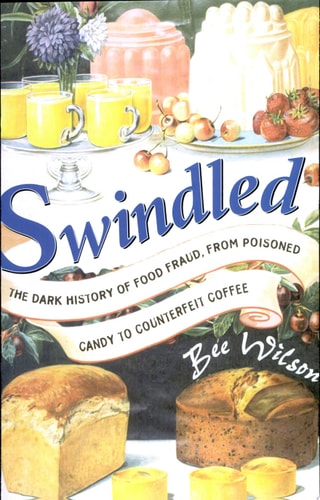
Swindled
0
0
As an Amazon Associate and affiliate partner, Menrva Books earns from qualifying purchases. Learn more
Author Description
Bad food has a history. Swindled tells it. Through a fascinating mixture of cultural and scientific history, food politics, and culinary detective work, Bee Wilson uncovers the many ways swindlers have cheapened, falsified, and even poisoned our food throughout history. In the hands of people and corporations who have prized profits above the health of consumers, food and drink have been tampered with in often horrifying ways--padded, diluted, contaminated, substituted, mislabeled, misnamed, or otherwise faked. Swindled gives a panoramic view of this history, from the leaded wine of the ancient Romans to today's food frauds--such as fake organics and the scandal of Chinese babies being fed bogus milk powder. Wilson pays special attention to nineteenth- and twentieth-century America and England and their roles in developing both industrial-scale food adulteration and the scientific ability to combat it. As Swindled reveals, modern science has both helped and hindered food fraudsters--increasing the sophistication of scams but also the means to detect them. The big breakthrough came in Victorian England when a scientist first put food under the microscope and found that much of what was sold as "genuine coffee" was anything but--and that you couldn't buy pure mustard in all of London. Arguing that industrialization, laissez-faire politics, and globalization have all hurt the quality of food, but also that food swindlers have always been helped by consumer ignorance, Swindled ultimately calls for both governments and individuals to be more vigilant. In fact, Wilson suggests, one of our best protections is simply to reeducate ourselves about the joys of food and cooking.
Menrva's Summary
THE THESIS
The history of food fraud is a story of profit over people, with swindlers consistently cheapening, falsifying, and poisoning our food. Bee Wilson, a renowned food historian and writer, investigates the long and often horrifying history of food adulteration, from ancient Roman practices to modern-day scandals. Her work combines cultural and scientific history with culinary detective work, examining how industrialization, laissez-faire politics, and globalization have impacted food quality. The book highlights the dual role of modern science in both enabling sophisticated food scams and providing the means to detect them, ultimately calling for increased vigilance from both governments and individuals.
THE SCOPE MAP
- A historical overview of food adulteration and fraud across different cultures and eras.
- Detailed examination of specific historical cases, from Roman leaded wine to Victorian London's fake coffee and mustard.
- Analysis of food fraud in nineteenth
- and twentieth-century America and England, key centers of industrial food production and regulation.
- Exploration of contemporary food frauds, including fake organic products and contaminated infant formula.
- Discussion of the role of science in both perpetuating and combating food fraud.
- An argument for the impact of industrialization, laissez-faire politics, and globalization on food quality.
- A call for greater vigilance from consumers and governments, and the importance of culinary education.
THE AUTHORITY PERSPECTIVE
Bee Wilson's "Swindled" is lauded for its meticulous research and engaging narrative, drawing a clear line from ancient food adulteration to contemporary scandals. Critics highlight the book's ability to weave together scientific history, cultural context, and investigative journalism to expose the pervasive nature of food fraud. The work is recognized for its timely relevance in an era of globalized food systems and increasing consumer concerns about food safety and authenticity. Ultimately, "Swindled" serves as both a historical exposé and a compelling argument for greater awareness and regulation in the food industry.
Page Count:
400
Publication Date:
2020-06-16
Publisher:
Princeton University Press
ISBN-10:
0691214085
ISBN-13:
9780691214085
Non-Fiction
History
Science History
Social History
Food History
Consumerism
Culinary History
Community Tags
Similar Books