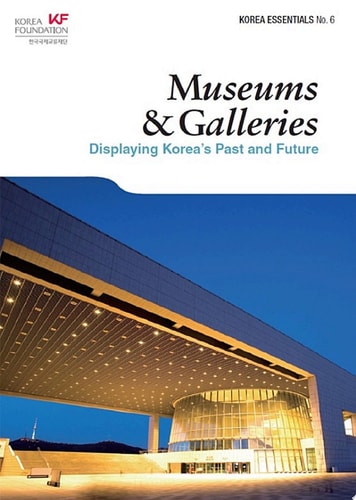
Museums & Galleries Displaying Korea's Past and Future
0
0
As an Amazon Associate and affiliate partner, Menrva Books earns from qualifying purchases. Learn more
Author Description
The history of Korean museums goes back more than 100 years, to the opening of the Jesil Bangmulgwan in 1909. There are now 11 national museums in provincial cities throughout Korea, unified by the hub that is Seoul's iconic National Museum of Korea, completed in 2005, while the large number of regional, university, art, specialized and other museums continues to rise. Korea's galleries emerged one by one with the advent of "modernity," the flourishing of modern art and the development of the economy, introducing many Korean and international artists and playing an important role in developing popular culture. Korea's museums and galleries, displaying everything from Paleolithic relics to the latest experimental works by contemporary artists, offer windows onto the country's past, present and future.
Menrva's Summary
THE THESIS
This book explores the evolution and significance of museums and galleries in South Korea, tracing their development from the early 20th century to the present day. The narrative details the establishment of national museums, highlighting the National Museum of Korea as a central institution, and chronicles the parallel growth of art galleries that emerged with modernity and economic development. It examines how these institutions, showcasing a spectrum from ancient artifacts to contemporary art, serve as crucial conduits to understanding Korea's past, present, and future.
THE SCOPE MAP
- The historical trajectory of Korean museums, beginning with the Jesil Bangmulgwan in 1909.
- The network of 11 national museums across provincial cities.
- The role of the National Museum of Korea as a central hub.
- The emergence and development of Korean art galleries alongside modernity and economic growth.
- The exhibition of diverse collections, ranging from Paleolithic relics to contemporary experimental works.
- The function of museums and galleries as windows into Korea's past, present, and future.
- The increasing number of regional, university, art, and specialized museums.
THE AUTHORITY PERSPECTIVE
The book offers a comprehensive overview of South Korea's museum and gallery landscape, detailing their historical development and their role in cultural dissemination. It highlights the institutional growth from early 20th-century beginnings to the present day, emphasizing the National Museum of Korea and the parallel rise of art galleries. The text suggests these institutions provide vital insights into the nation's heritage and artistic evolution. The scope covers a wide range of exhibits, from ancient artifacts to modern art, positioning them as key elements in understanding Korea's trajectory.
Page Count:
134
Publication Date:
2015-07-27
Publisher:
Seoul Selection
ISBN-10:
1624120407
ISBN-13:
9781624120404
Non-Fiction
History
Art
Museum Studies
Community Tags
Similar Books