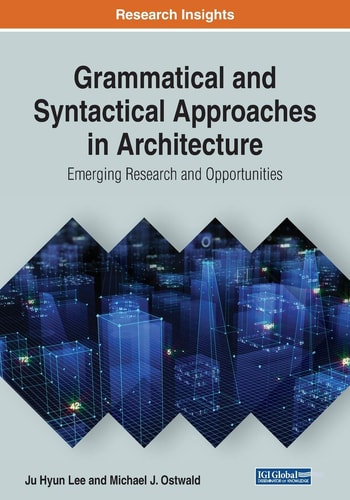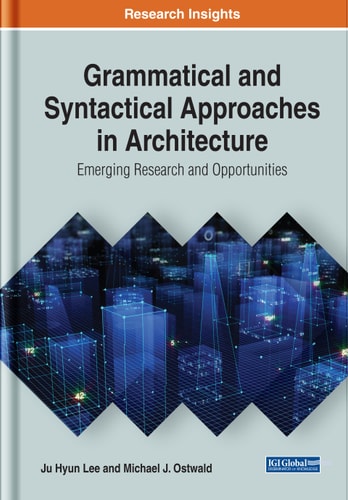
Grammatical and Syntactical Approaches in Architecture: Emerging Research and Opportunities
0
0
As an Amazon Associate and affiliate partner, Menrva Books earns from qualifying purchases. Learn more
Author Description
Shape grammar and space syntax have been separately developed but rarely combined in any significant way. The first of these is typically used to investigate or generate the formal or geometric properties of architecture, while the second is used to analyze the spatial, topological, or social properties of architecture. Despite the reciprocal relationship between form and space in architecture—it is difficult to conceptualize a completed building without a sense of both of these properties—the two major computational theories have been largely developed and applied in isolation from each another. Grammatical and Syntactical Approaches in Architecture: Emerging Research and Opportunities is a critical scholarly resource that explores the relationship between shape grammar and space syntax for urban planning and architecture and enables the creative discovery of both the formal and spatial features of an architectural style or type. This book, furthermore, presents a new method to selectively capture aspects of both the grammar and syntax of architecture. Featuring a range of topics such as mathematical analysis, spatial configuration, and domestic architecture, this book is essential for architects, policymakers, urban planners, researchers, academicians, and students.
Menrva's Summary
THE THESIS
This book investigates the potential synergy between shape grammar and space syntax, two distinct yet complementary computational theories in architecture. It addresses the historical isolation of these methods, where shape grammar typically focuses on formal and geometric properties, while space syntax analyzes spatial, topological, or social aspects. By exploring their reciprocal relationship, the work aims to enable the discovery of both formal and spatial features within architectural styles and types. The book presents a novel method for integrating these approaches to capture a more holistic understanding of architectural design and urban planning.
THE SCOPE MAP
- Exploration of the relationship between shape grammar and space syntax.
- Application of computational theories to urban planning and architecture.
- Methods for capturing formal and spatial features of architectural styles.
- Discussion of mathematical analysis in architectural research.
- Analysis of spatial configuration in architectural design.
- Case studies focusing on domestic architecture.
- Presentation of a new integrated method for architectural analysis.
THE AUTHORITY PERSPECTIVE
The book is positioned as a critical scholarly resource for professionals and academics in architecture and urban planning. It aims to bridge the gap between two major computational theories that have historically been applied in isolation. The content is designed to facilitate the creative discovery of both formal and spatial characteristics of architecture. Its inclusion of topics like mathematical analysis and spatial configuration suggests a rigorous academic approach.
Page Count:
351
Publication Date:
2019-12-20
Publisher:
IGI Global
ISBN-10:
1799817016
ISBN-13:
9781799817017
Non-Fiction
Architecture
Design Research
urban planning
Computational Theory
Spatial analysis
Community Tags
Similar Books