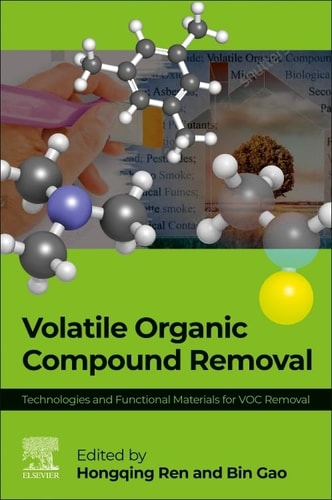
Volatile Organic Compound Removal Technologies and Functional Materials for VOC Removal
0
0
As an Amazon Associate and affiliate partner, Menrva Books earns from qualifying purchases. Learn more
Author Description
Volatile Organic Compound Removal: Technologies and Functional Materials for VOC Removal details technologies and materials for the removal of volatile organic compounds (VOCs) from polluted air, covering not only the fundamental mechanisms, processes, and designs of the latest VOC abatement technologies, but also the characteristics and applications of advanced functional materials for VOC removal. The first half of this book centers on VOC abatement technologies including catalytic degradation, thermal oxidation, membrane separation, adsorption, absorption, and condensation, whereas the second half focuses on the applications of functional materials, especially novel nanomaterials, in VOC removal. Volatile Organic Compound Removal: Technologies and Functional Materials for VOC Removal is unique in covering both the fundamental mechanisms and practical applications of VOC abatement technologies, as well as focusing on the preparation, characterization, and application of novel functional materials for VOC removal.
Menrva's Summary
THE THESIS
This book investigates the diverse technologies and functional materials employed for the removal of volatile organic compounds (VOCs) from polluted air. It covers the fundamental mechanisms, processes, and designs of the latest VOC abatement technologies, alongside the characteristics and applications of advanced functional materials. The content is divided into two main parts: the first half details VOC abatement technologies such as catalytic degradation, thermal oxidation, membrane separation, adsorption, absorption, and condensation, while the second half concentrates on the application of functional materials, particularly novel nanomaterials, in VOC removal.
THE SCOPE MAP
- Overview of catalytic degradation technologies for VOC removal.
- Detailed examination of thermal oxidation processes for VOC abatement.
- Exploration of membrane separation techniques for VOC removal.
- In-depth analysis of adsorption methods and materials for VOC capture.
- Discussion of absorption and condensation techniques in VOC removal.
- Focus on the preparation and characterization of novel nanomaterials for VOC removal.
- Applications of advanced functional materials in practical VOC abatement scenarios.
THE AUTHORITY PERSPECTIVE
The book is structured to provide a comprehensive overview of VOC removal, bridging fundamental scientific principles with practical engineering applications. Its dual focus on both abatement technologies and the functional materials used within them offers a unique perspective for researchers and industry professionals. The emphasis on novel nanomaterials suggests a forward-looking approach to addressing air pollution challenges. The detailed coverage of various technologies and material science aspects indicates a text aimed at a specialized audience seeking in-depth knowledge.
Page Count:
320
Publication Date:
2024-08-23
Publisher:
Elsevier Science
ISBN-10:
0443156743
ISBN-13:
9780443156748
Non-Fiction
Science
Chemical Engineering
Community Tags
Similar Books