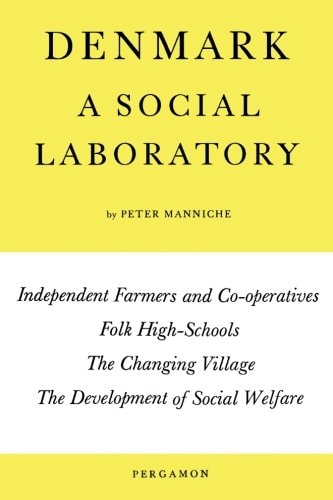
Denmark: A Social Laboratory: Independent Farmers and Co-Operatives, Folk High-Schools, the Changing Village, the Development of Social Welfare in Town and Country
0
0
As an Amazon Associate and affiliate partner, Menrva Books earns from qualifying purchases. Learn more
Author Description
A Social Laboratory explores the history of the agricultural sector in Denmark. This is the first part in a series of books on “Rural Development and Changing Countries of the World.” The book is organized into two parts. Part I provides an overview of the agricultural industry in Denmark and explores the history of the farmers’ response to internal problems, the development of farmers’ cooperation, the establishment of folk high schools for young adults, and vocational training for farmers. Part II explores the evolution of rural village in Denmark, analyzes the development of social legislation, and describes the structure of the changing village. This book will be of interest to persons dealing with studies on rural development and the history of agricultural development in Denmark.
Menrva's Summary
THE THESIS
This work investigates how Denmark transformed its agricultural sector and social infrastructure through cooperative movements and educational reform. Peter Manniche, a scholar of rural development, utilizes historical analysis and sociological observation to document the evolution of the Danish model. The text argues that the synergy between independent farming, vocational education, and social legislation created a unique, stable framework for national development.
THE SCOPE MAP
What You Will Find
- Historical analysis of the Danish agricultural industry and cooperative movement.
- Examination of the role of folk high schools in adult vocational training.
- Sociological study of the changing structure of rural villages.
- Overview of the development of national social welfare legislation.
Scope Limits
- The text focuses primarily on the rural and agricultural sectors rather than urban industrialization.
- The analysis is bounded by the mid-20th-century context of the author's research.
THE AUTHORITY PERSPECTIVE
Experts recognize this text as a foundational study for understanding the historical development of the Danish cooperative model. Readers frequently note the academic density of the prose, which serves as a detailed reference for students of rural sociology and agricultural history.
Page Count:
360
Publication Date:
1969-01-01
Publisher:
Pergamon
ISBN-10:
0080069916
ISBN-13:
9780080069913
Politics
History
Denmark
Sociology
Agriculture
Social Welfare
Community Tags
Similar Books