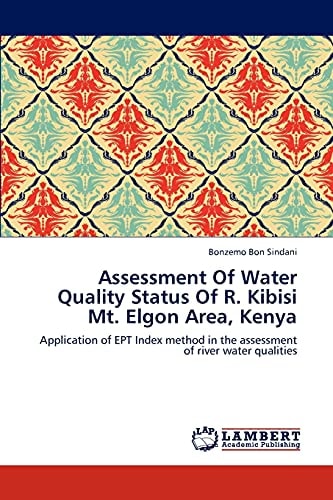
Assessment of Water Quality Status of R. Kibisi Mt. Elgon Area, Kenya
0
0
As an Amazon Associate and affiliate partner, Menrva Books earns from qualifying purchases. Learn more
Author Description
The term water quality is applied universally to refer to the water that meets the universal standards set for legitimate and vital water use at any scale i.e. local, regional and international levels. The evolution of the term water quality has been due to the expansion of water requirements and ability to measure and interpret water characteristics. The definition of water quality depends on the factors that determine it, and other variables that affect the nature of water resource. Pollution and degradation of water quality interferes with legitimate and vital water use at any scale i.e. local, regional and international levels. However, water quality standards have been established for regulatory purposes and are determined from judgment on the criteria involved in the standards dependent on domestic, agricultural, industrial and life in aquatic systems. River water quality status is generally affected by many physical, chemical and biological parameters introduced by natural forces and human (anthropogenic) activities. Water quality criteria, standards and related legislation are often used as the main administrative means to manage water resource.
Menrva's Summary
THE THESIS
This study assesses the water quality status of the R. Kibisi river in the Mt. Elgon area of Kenya, examining the physical, chemical, and biological parameters that influence its suitability for various uses. The research addresses the universal concept of water quality, which is defined by the standards required for legitimate water use at local, regional, and international levels. It acknowledges that water quality is determined by numerous factors, including natural forces and anthropogenic activities, and that pollution can interfere with these vital uses. The work also touches upon the establishment of water quality criteria and standards for regulatory and management purposes.
THE SCOPE MAP
- Assessment of physical parameters affecting river water quality.
- Analysis of chemical parameters influencing water characteristics.
- Evaluation of biological parameters impacting aquatic systems.
- Identification of natural and anthropogenic sources of pollution.
- Discussion of established water quality criteria and standards.
- Application of water quality management principles.
- Focus on the R. Kibisi river in the Mt. Elgon region of Kenya.
THE AUTHORITY PERSPECTIVE
The book presents a focused scientific assessment of a specific river's water quality, likely employing standard environmental monitoring techniques. Its approach suggests a detailed examination of physical, chemical, and biological indicators to understand the river's condition and potential pollution sources. The work appears to be grounded in established scientific frameworks for water resource management and regulatory standards. The research is expected to provide valuable data for local environmental agencies and researchers interested in water quality in the region.
Page Count:
128
Publication Date:
2012-01-01
Publisher:
Lap Lambert Academic Publishing GmbH KG
ISBN-10:
3847321366
ISBN-13:
9783847321361
Science
Non-Fiction
Hydrology
Water Quality
Kenya
Community Tags
Similar Books