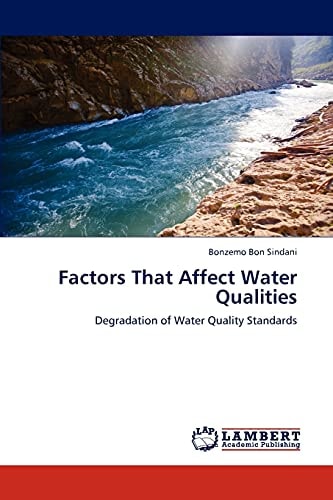
Factors That Affect Water Qualities
0
0
As an Amazon Associate and affiliate partner, Menrva Books earns from qualifying purchases. Learn more
Author Description
The term water quality is applied universally to refer to the water that meets the universal standards set for legitimate and vital water use at any scale i.e. local, regional and international levels. The evolution of the term water quality has been due to the expansion of water requirements and ability to measure and interpret water characteristics. The definition of water quality depends on the factors that determine it, and other variables that affect the nature of the water resource. Pollution and degradation of water quality interferes with legitimate and vital water use at any scale i.e. local, regional and international levels. Water quality criteria, standards and the related legislation are used as the main administrative means to manage water quality in order to achieve user requirements. The most common national requirements for drinking water of suitable quality for many countries are based on the standards of the World Health Organization (WHO, 1984, 1993.) guidelines for drinking water quality. Water quality standards for surface waters vary significantly due to different environmental conditions, ecosystems and intended human uses.
Menrva's Summary
THE THESIS
This book investigates the multifaceted factors that influence water quality and its universal standards for legitimate use. The text explores how the evolving requirements for water and the increasing ability to measure its characteristics have shaped the definition of water quality. It addresses how pollution and degradation interfere with vital water uses and details the administrative means, such as criteria, standards, and legislation, employed to manage water quality to meet user needs. The book also notes that common national drinking water standards are often based on WHO guidelines, while surface water standards vary significantly due to environmental conditions and intended uses.
THE SCOPE MAP
- Definition and evolution of water quality standards
- Factors influencing water characteristics
- Impact of pollution and degradation on water use
- Administrative tools for water quality management (criteria, standards, legislation)
- National drinking water requirements and WHO guidelines
- Variability of surface water quality standards based on environmental conditions and human uses
THE AUTHORITY PERSPECTIVE
The book appears to offer a foundational overview of water quality management, likely serving as an introductory text for students or professionals in environmental science or public health. Its focus on established standards and administrative approaches suggests a practical and informative approach to the subject matter. The content aligns with typical curriculum requirements for understanding water resource management and public health implications. The text is structured to explain the core concepts and regulatory frameworks governing water quality.
Page Count:
76
Publication Date:
2012-01-01
Publisher:
Lap Lambert Academic Publishing GmbH KG
ISBN-10:
3845424060
ISBN-13:
9783845424064
Science
Non-Fiction
Public Health
Water Quality
Community Tags
Similar Books