Design for Flexibility
0
0
As an Amazon Associate and affiliate partner, Menrva Books earns from qualifying purchases. Learn more
Author Description
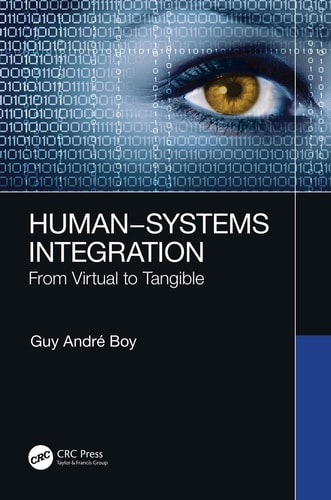
Design for flexibility requires anticipation, preparation, creativity and experience. Future highly digital sociotechnical systems should contrast with those stemming from technology-centered engineering that produces objects and machines with the immensely codified and rigid practices we know today. Most of the time, current technologies are designed and developed for normal situations, leaving users to manage abnormal and emergency situations themselves, sometimes under unforeseen, extreme and/or dangerous conditions. Putting humans at the center of the design of flexible sociotechnical systems means visualizing possible futures, modeling them, simulating them and leading them down the right paths. This book is for the engineering designers, who seek to better understand the roles of humans and organizations developing complex life-critical systems. It is also for those who train future designers who will have to take into account the well-being, safety, sustainability and efficiency of the actors of future sociotechnical systems. It is about an emergent discipline, human systems integration (HSI). The aim of the flexibility challenge is to put the artificial at the service of the natural, and not the other way around. The author, an aerospace engineering designer, has worked for 40 years in the field of human-centered design (HCD) of complex systems, discovering repeatedly that automation leads to rigidity, especially when things go wrong. It is urgent we had a new paradigm where flexibility is a major asset in human systems integration. HCD is seen here as the combination of practices and technologies to come.
Menrva's Summary
THE THESIS
This book challenges traditional technology-centered engineering by advocating for a human-centered approach to designing flexible sociotechnical systems. The author argues that current engineering practices often create rigid systems that fail in abnormal or emergency situations, leaving users to manage unforeseen conditions. By placing humans at the core of design, the book proposes methods for visualizing, modeling, and simulating possible futures to ensure the well-being, safety, sustainability, and efficiency of system actors. It introduces human systems integration (HSI) as an emergent discipline focused on making the artificial serve the natural.
THE SCOPE MAP
- A critique of technology-centered engineering and its inherent rigidity.
- Principles and practices of human-centered design (HCD) for complex systems.
- The concept of Human Systems Integration (HSI) as a new paradigm.
- Strategies for anticipating, preparing for, and managing future system states.
- The role of humans and organizations in developing life-critical systems.
- The contrast between automation-induced rigidity and desired flexibility.
- An exploration of the author's 40 years of experience in aerospace engineering design.
THE AUTHORITY PERSPECTIVE
The book is presented as a call for a new paradigm in engineering design, emphasizing flexibility and human well-being. It targets engineering designers and educators involved with complex, life-critical systems. The author's extensive experience in human-centered design is highlighted as a foundation for the proposed approach. The work aims to shift the focus from technology-centric development to a more adaptable, human-integrated model.
Page Count:
111
Publication Date:
2021-06-19
Publisher:
Springer Nature
ISBN-10:
3030763919
ISBN-13:
9783030763916
Science & Technology
Non-Fiction
Sociotechnical Systems
Community Tags
Similar Books