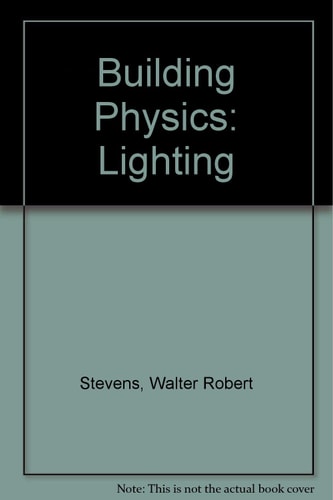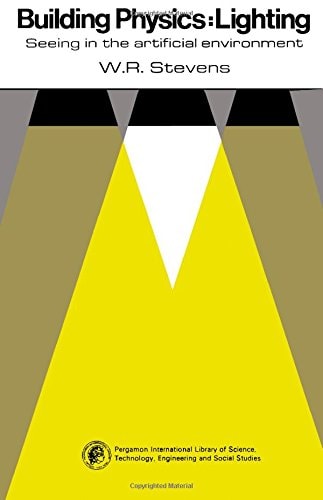
Building physics: lighting;: Seeing in the artificial environment (The Commonwealth and international library. Physics division)
0
0
As an Amazon Associate and affiliate partner, Menrva Books earns from qualifying purchases. Learn more
Author Description
Building Lighting, Seeing in the Artificial Environment deals with basic principles of lighting as used in architecture, in building maintenance, and in an artificial environment. The book starts with the process of how humans see; the interaction of the eye and mind; and the effects of fatigue, visual disorders, and age. The phenomena of light are then discussed — how light behaves and how it is measured. Light and light waves beyond the visible spectrum are explained scientifically as being part of the electromagnetic spectrum within the 400 to 760 nm ranges.The different light sources are identified as daylight and artificial lights, with many types of lamps under the latter. As regards artificial lighting, a lighting fitting has two redistributes luminescence properly and provides a suitable receptacle for the lamp. The requirements when using artificial or natural light in an exterior or interior setting are enumerated. The book also explains the specifications of the amount of light and how this amount is calculated. Interior lighting, both from artificial and natural sources, is comprehensively discussed, including issues such as discomfort glare, reflected glare, design and aesthetics, lighting requirements in different kinds of buildings, and flammability properties. The text also tackles exterior lighting including decorative floodlights, lighting for tunnels and underpasses, and special problem areas.Architects, engineers, electricians, interior designers, lighting technicians, environmentalists, and readers with interest in home decor will find this book useful.
Menrva's Summary
THE THESIS
This book investigates the fundamental principles of lighting design and human visual perception within the context of artificial and natural building environments. Wallace Roberts Stevens provides a technical framework that bridges human physiology with architectural application. By synthesizing optical science, electromagnetic spectrum data, and practical lighting requirements, the author establishes a methodology for calculating and implementing effective illumination in diverse structural settings.
THE SCOPE MAP
What You Will Find
- Human visual perception, including the interaction between the eye and the brain.
- Scientific properties of light, including wave behavior and measurement units.
- Technical specifications for artificial light sources and lamp types.
- Design considerations for interior and exterior lighting, including glare control and aesthetics.
Scope Limits
- Does not cover advanced digital lighting control systems developed post-publication.
- Does not provide exhaustive historical analysis of architectural lighting styles.
THE AUTHORITY PERSPECTIVE
Professionals in architecture and engineering frequently cite this text as a foundational resource for understanding the physics of light in built environments. Readers often note the technical density of the prose, which serves as a comprehensive reference for those involved in lighting design and building maintenance.
Page Count:
235
Publication Date:
1969-01-01
Publisher:
Pergamon Press
ISBN-10:
0080063705
ISBN-13:
9780080063706
Architecture
Physics
Engineering
Science & Math
Lighting Design
Building Physics
Optics
Community Tags
Similar Books