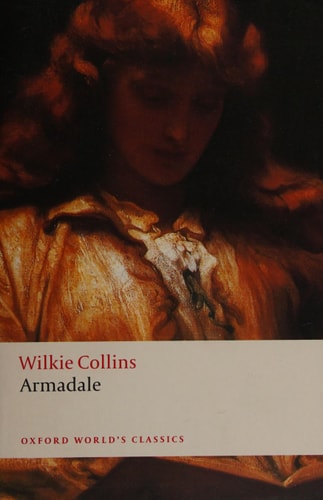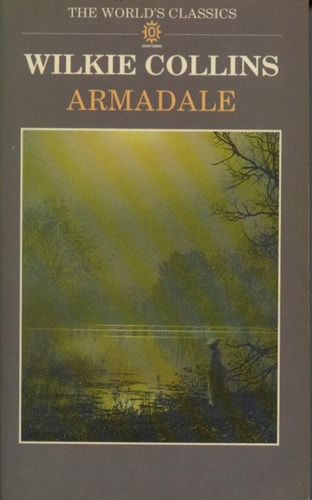
Armadale
0
0
As an Amazon Associate and affiliate partner, Menrva Books earns from qualifying purchases. Learn more
Author Description
The third of Wilkie Collins' four great novels of the 1860's, Armadale deals with the emergence of the autonomous, sexually active woman from the dichotomies of Madonna and Magdalene. Above all, it explores the divided self and the need to acknowledge the darker side of the personality.
Menrva's Summary
THE PULSE
A complex web of inheritance, identity, and criminal conspiracy is set into motion by a deathbed confession that binds the fates of two men sharing the same name.
Allan Armadale and his namesake are caught in a multi-generational struggle for fortune and legitimacy, orchestrated by the manipulative and enigmatic Lydia Gwilt. The narrative follows their movements through a world governed by Victorian social expectations, where the protagonist must navigate the psychological machinations of those seeking to exploit his vulnerability. Collins employs a multi-perspective framework, utilizing letters, diaries, and third-person narration to reveal the fractured nature of his characters' motivations and the hidden secrets of their pasts.
INSIDE THE PAGES
- Intricate plot involving mistaken identity and long-standing family secrets
- Use of epistolary elements including letters and diary entries
- Exploration of the 'New Woman' archetype through the character of Lydia Gwilt
- Detailed psychological character studies of the central antagonists
- Themes of fatalism and the influence of heredity on individual choice
- Atmospheric settings ranging from the Norfolk Broads to London urban environments
- Complex narrative structure that shifts between multiple viewpoints
- Focus on the duality of human nature and the suppression of darker impulses
THE COLLECTIVE ECHO
Readers and critics frequently highlight the novel's intricate plotting and its status as a quintessential example of the Victorian sensation genre. Discussion often centers on the character of Lydia Gwilt, who is frequently cited as one of the most compelling and complex female antagonists in nineteenth-century literature. Many observers note that the pacing is deliberate, allowing for deep psychological exploration rather than relying solely on rapid action. The balance between the mystery elements and the character-driven drama is often praised for its sophistication and thematic depth. Overall, the work is recognized for its contribution to the development of the psychological thriller and its critique of contemporary social structures.
Page Count:
720
Publication Date:
1990-01-11
Publisher:
Oxford University Press
ISBN-10:
0192818023
ISBN-13:
9780192818027
Mystery
Psychological Thriller
Classic fiction
Fathers and sons
Victorian
England