
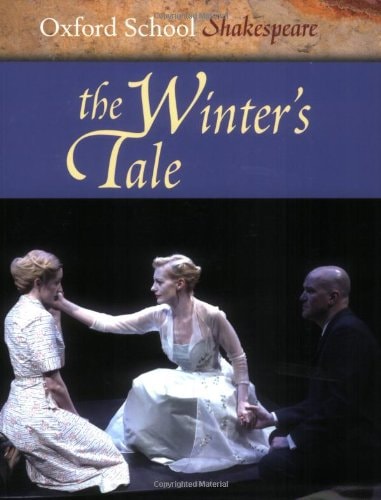
The Winter's Tale
0
0
As an Amazon Associate and affiliate partner, Menrva Books earns from qualifying purchases. Learn more
Author Description
The Winter's Tale is Shakespeare's most fully realized tragicomedy, noted for the richness and complexity of its poetry. Though the title may suggest an escapist fantasy, recent criticism has seen in the play a profoundly realistic psychology and a keen commentary on the violence implicit in family relationships and deep friendships. Orgel traces the changing critical and theatrical attitudes towards the play, and places its psychological and dramatic conflicts within the Jacobean cultural and political context. This edition is made complete with a reprint of Shakespeare's source for the play, Pandosto, by Robert Greene.
Menrva's Summary
THE PULSE
A king's sudden, irrational jealousy shatters his family and kingdom, setting in motion a long-gestating cycle of loss and eventual reconciliation. Leontes, King of Sicilia, becomes convinced of his wife Hermione's infidelity with his childhood friend Polixenes, leading to a series of impulsive, destructive actions that result in the apparent death of his queen and the abandonment of his newborn daughter. The narrative spans sixteen years and shifts between the rigid, claustrophobic court of Sicilia and the pastoral, festive landscape of Bohemia. The play utilizes a dramatic structure that transitions from intense psychological tragedy to a more hopeful, mythic resolution. The characters must navigate the consequences of past trauma, the passage of time, and the possibility of forgiveness within a world governed by both human fallibility and divine intervention.
INSIDE THE PAGES
- Shift from tragic intensity to pastoral comedy
- Exploration of irrational jealousy and paranoia
- Use of the 'time' figure as a chorus
- Contrast between courtly and rural settings
- Themes of redemption and restoration
- Complex, poetic soliloquies
- Dramatic irony regarding the survival of the queen
- Inclusion of the source material, Pandosto, for comparative study
THE COLLECTIVE ECHO
Readers and critics frequently highlight the play's unique structural shift, noting how the transition from the dark, psychological tension of the first three acts to the lighthearted pastoral scenes creates a distinct tonal contrast. Discussion often centers on the character of Leontes and whether his sudden descent into jealousy is a flaw of the writing or a deliberate study of human volatility. Scholars emphasize the play's focus on the redemptive power of time and the role of the younger generation in healing the wounds inflicted by their parents. Many readers find the final act, particularly the statue scene, to be a significant moment of theatrical artifice that challenges the audience's perception of reality and forgiveness.
Page Count:
304
Publication Date:
1996-09-26
Publisher:
Oxford University Press
ISBN-10:
0192819569
ISBN-13:
9780192819567
Drama
Plays
Renaissance
classic
Tragicomedy
Dramatic works
Community Tags
Other Editions(8)
Similar Books


Reader Comments
Share Your Thoughts
No comments yet. Be the first to share your thoughts!