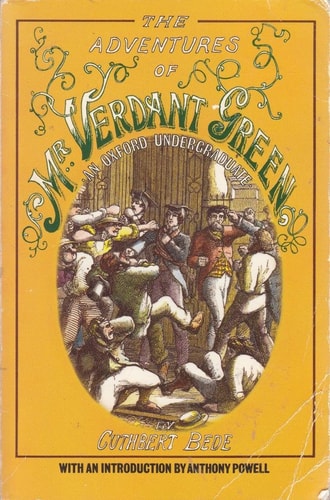
The Adventures of Mr. Verdant Green
0
0
As an Amazon Associate and affiliate partner, Menrva Books earns from qualifying purchases. Learn more
Author Description
This book was originally published prior to 1923, and represents a reproduction of an important historical work, maintaining the same format as the original work. While some publishers have opted to apply OCR (optical character recognition) technology to the process, we believe this leads to sub-optimal results (frequent typographical errors, strange characters and confusing formatting) and does not adequately preserve the historical character of the original artifact. We believe this work is culturally important in its original archival form. While we strive to adequately clean and digitally enhance the original work, there are occasionally instances where imperfections such as blurred or missing pages, poor pictures or errant marks may have been introduced due to either the quality of the original work or the scanning process itself. Despite these occasional imperfections, we have brought it back into print as part of our ongoing global book preservation commitment, providing customers with access to the best possible historical reprints. We appreciate your understanding of these occasional imperfections, and sincerely hope you enjoy seeing the book in a format as close as possible to that intended by the original publisher.
Menrva's Summary
THE PULSE
The narrative follows the naive Mr. Verdant Green as he navigates the complex social and academic hierarchies of Oxford University. Upon his arrival at the university, Verdant Green encounters a series of eccentric students and faculty members who subject him to various pranks and initiation rituals. The protagonist must learn to adapt to the rigid expectations of collegiate life while attempting to maintain his dignity amidst constant ridicule. The story utilizes a third-person perspective to document the protagonist's gradual transformation from a sheltered youth into a seasoned university student.
INSIDE THE PAGES
- Detailed depictions of 19th-century university customs
- Satirical commentary on academic social structures
- Episodic structure focusing on various student pranks
- Character archetypes representing different social classes
- Use of period-specific slang and colloquialisms
- Integration of humorous illustrations within the text
- Exploration of the transition from adolescence to adulthood
- Focus on the contrast between rural innocence and urban sophistication
THE COLLECTIVE ECHO
Readers often identify this work as a significant piece of Victorian satire that captures the specific atmosphere of mid-19th-century Oxford. Discussion frequently centers on the author's ability to balance lighthearted humor with a critique of the university's exclusionary social practices. Critics highlight the episodic nature of the plot, which serves to showcase a wide array of character types rather than focusing on a singular dramatic arc. Many readers appreciate the historical value of the text as a window into the traditions and daily life of students during that era. The work remains a point of interest for those studying the evolution of the campus novel genre.
Page Count:
365
Publication Date:
1982-01-01
Publisher:
Oxford University Press
ISBN-10:
0192813315
ISBN-13:
9780192813312
Humor
Satire
classic
University Life
Victorian
Community Tags
Other Editions(2)

Similar Books