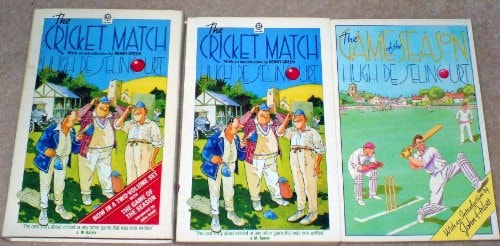
The Cricket Match and the Game of the Season: Banded Set
0
0
As an Amazon Associate and affiliate partner, Menrva Books earns from qualifying purchases. Learn more
Author Description
In The Cricket Match (1924) and in its successor The Game of the Season (1935), English author and journalist Hugh de Sélincourt (1878-1951) gives a glimpse of life in a Sussex village. First we have a bird's-eye view at dawn of the village nestling under the Downs then we see the players awaken in all widely different circumstance of their various lives, pass the morning, assemble on the field, play their game, united for a few hours, as men should be, by a common purpose - and at night disperse.
Menrva's Summary
THE PULSE
A single day of cricket serves as the catalyst for revealing the interconnected lives and social dynamics of a small Sussex village. The narrative follows the inhabitants of the village as they transition from their private morning routines to the collective arena of the cricket pitch. The primary conflict arises not from the sport itself, but from the challenge of maintaining community cohesion amidst the disparate personal circumstances and temperaments of the players. The story utilizes a descriptive, observational framework to capture the rhythm of rural English life during the early twentieth century.
INSIDE THE PAGES
- Detailed depiction of rural Sussex village life
- Focus on the camaraderie and social unity fostered by sport
- Character-driven vignettes of various village residents
- Atmospheric descriptions of the English countryside
- Exploration of the intersection between private lives and public duty
- Chronological progression from dawn to dusk
- Emphasis on the philosophy of sportsmanship
- Examination of class and social roles within a localized setting
THE COLLECTIVE ECHO
Readers and critics often describe these works as quintessential examples of English pastoral fiction that prioritize atmosphere over high-stakes drama. Discussion frequently centers on the author's ability to transform a simple sporting event into a profound meditation on human connection and community spirit. Many highlight the gentle, rhythmic pacing as a reflection of the rural setting, noting that the books succeed by focusing on the subtle nuances of character interaction. The works are often praised for their authentic portrayal of the social landscape of the era, providing a window into a specific time and place that remains accessible to modern readers.
Page Count:
0
Publication Date:
1982-01-01
Publisher:
Oxford University Press
ISBN-10:
0192820648
ISBN-13:
9780192820648
Sports
Fiction
Cricket
Village Life
classic
English literature