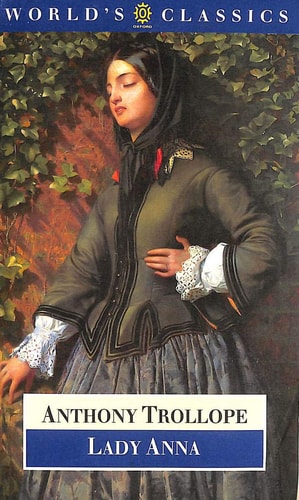
Lady Anna
0
0
As an Amazon Associate and affiliate partner, Menrva Books earns from qualifying purchases. Learn more
Author Description
First published in 1874, Lady Anna is a tale of enforced marriage in the midst of a world of radical politics and social inequality. We see the attempts of Countess Lovel to justify her claim to her title and the struggles of her daughter Anna as she must choose between a marriage of true love and one of convenience and social profit.
Menrva's Summary
THE PULSE
The central conflict arises when Lady Anna finds herself caught between the rigid expectations of her aristocratic heritage and her personal desire for a marriage based on affection rather than social standing. The protagonist, Anna, faces intense pressure from her mother, the Countess Lovel, who seeks to secure their precarious social position through a strategic alliance. Opposing Anna's choice is the weight of Victorian class structure and the legal complexities surrounding her mother's disputed title. The narrative unfolds through a third-person perspective that examines the intersection of individual agency and societal obligation within the rigid hierarchies of the nineteenth century.
INSIDE THE PAGES
- Exploration of Victorian class mobility and social stratification
- Examination of the legal and moral implications of aristocratic titles
- Contrast between romantic idealism and pragmatic social advancement
- Focus on the psychological burden of parental expectations
- Detailed depiction of nineteenth-century legal and social customs
- Analysis of the tension between radical politics and traditional values
- Character-driven narrative focusing on internal moral dilemmas
- Paced development of interpersonal relationships within a restrictive environment
THE COLLECTIVE ECHO
Discussion often centers on Trollope's nuanced portrayal of the conflict between duty and personal happiness. Readers frequently highlight the author's ability to critique the rigid social structures of the Victorian era without sacrificing the humanity of his characters. Critics often note the effectiveness of the legal and social atmosphere in driving the plot forward, providing a realistic backdrop for the protagonist's difficult choices. The balance between the domestic sphere and the broader political context remains a frequent point of analysis for those interested in nineteenth-century literature. Many readers appreciate the deliberate pacing that allows for a thorough examination of the characters' evolving motivations.
Page Count:
552
Publication Date:
1991-10-10
Publisher:
Oxford University Press
ISBN-10:
0192821342
ISBN-13:
9780192821348
Romance
Victorian
England
classic
Social Commentary
Historical
Community Tags
Other Editions(13)

Creative Media Partners, LLC
2022
Default edition
Alpha Editions
2022

Independently Published
2020

ReadHowYouWant.com
2019
CreateSpace Independent Publishing Platform
2018

CreateSpace Independent Publishing Platform
2017

CreateSpace Independent Publishing Platform
2017

Classic Books
2013
Oxford University Press
2009

Babblebooks
2007

Kessinger Publishing
2004

Kessinger Publishing
2004
Oxford University Press
1991
Similar Books




Reader Comments
Share Your Thoughts
No comments yet. Be the first to share your thoughts!