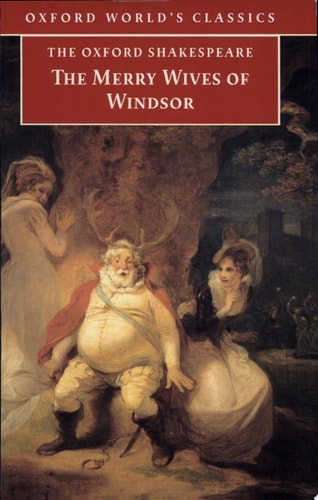
The Merry Wives of Windsor
0
0
As an Amazon Associate and affiliate partner, Menrva Books earns from qualifying purchases. Learn more
Author Description
When a new play was required at short notice for a court occasion in 1597, Shakespeare created The Merry Wives of Windsor, a warm-hearted and spirited "citizen comedy" filled with boisterous action, situational irony, rich characterization--and the likes of Falstaff, Pistol, Mistress Quickly, and Justice Shallow. In his introduction and commentary, Craik examines a wide range of topics, including the play's probable occasion, its relationship to Shakespeare's English history plays and to other sources, its textual history, with particular reference to the widely diverging 1623 Folio and 1602 Quarto, and its quality as drama. In light of various topical, critical, and theatrical interpretations of the play, Craik pays particular attention to defining the literal sense, proposing some new readings, and evoking the many aspects of the stage business.
Menrva's Summary
THE PULSE
Sir John Falstaff attempts to seduce two wealthy married women simultaneously, only to find himself the target of their elaborate and humiliating pranks. The protagonist, Falstaff, seeks financial gain through these romantic pursuits, but he faces opposition from the clever Mistress Ford and Mistress Page, who coordinate their efforts to expose his vanity. The narrative operates within the constraints of a domestic comedy, utilizing a series of farcical encounters and social deceptions to drive the plot. The play is structured as a five-act dramatic work, relying on rapid-fire dialogue and physical comedy to maintain its momentum.
INSIDE THE PAGES
- Use of situational irony to undermine the protagonist's intentions
- Focus on middle-class domestic life rather than royal court politics
- Integration of slapstick physical comedy and elaborate pranks
- Development of distinct, archetypal characters such as the jealous husband and the boastful knight
- Exploration of themes regarding marriage, fidelity, and social reputation
- Utilization of prose and verse to differentiate character status and tone
- Incorporation of regional dialect and wordplay to enhance comedic effect
- Emphasis on the resolution of conflict through public exposure and communal reconciliation
THE COLLECTIVE ECHO
Discussion often centers on the play's unique position as a domestic comedy within the broader Shakespearean canon. Readers frequently highlight the boisterous nature of the humor and the effectiveness of the female leads in controlling the narrative arc. Critics often examine the contrast between the Falstaff presented here and his more complex iteration in the history plays. The work is noted for its accessibility and its focus on the everyday lives of citizens, which provides a distinct atmosphere compared to the playwright's tragedies. Many audiences appreciate the play's fast-paced structure and its reliance on clever schemes rather than high-stakes political drama.
Page Count:
256
Publication Date:
1998-10-29
Publisher:
Oxford University Press
ISBN-10:
0192836080
ISBN-13:
9780192836083
Drama
Dramatic works
Elizabethan Theater
classic
Comedy
Play
Community Tags
Other Editions(4)


Similar Books