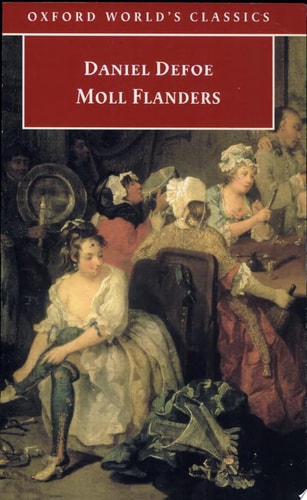
The Fortunes and Misfortunes of the Famous Moll Flanders
0
0
As an Amazon Associate and affiliate partner, Menrva Books earns from qualifying purchases. Learn more
Author Description
Moll Flanders recounts the story of her extraordinary life, from her birth in Newgate prison to her declining years in married prosperity. After being seduced in the home of her adoptive family she lives off her wits and her beauty, as a whore, 'five times a Wife', and a thief, and is eventually transported to Virginia for her crimes. Rich and penitent, Moll reflects on a world that is both good and evil, just as the reader both abhors and admires her. Arguably the first English novel, Moll Flanders is also a romance, its heroine in perpetual search for a lost familial paradise.
Menrva's Summary
THE PULSE
Born in Newgate prison and abandoned to a life of uncertainty, Moll Flanders navigates the harsh social hierarchies of 17th-century England through a series of calculated marriages and criminal exploits. Driven by a desperate need for financial security and social standing, the protagonist employs her wit and physical appeal to survive in a world that offers few protections for women. She faces constant threats of poverty, social ostracization, and legal retribution, forcing her to adopt various identities to maintain her independence. The narrative is presented as an autobiographical account, providing a retrospective look at her moral compromises and eventual transition toward repentance. Her objective remains the acquisition of wealth and stability, which frequently conflicts with the rigid moral and legal structures of her time.
INSIDE THE PAGES
- First-person confessional narrative style
- Picaresque structure following a series of episodic adventures
- Exploration of 17th-century social and economic mobility
- Detailed depiction of criminal subcultures and prison life
- Examination of the intersection between morality and survival
- Use of irony to highlight the protagonist's self-justification
- Themes of identity, deception, and familial longing
- Realistic portrayal of colonial transportation as a legal punishment
THE COLLECTIVE ECHO
Discussion often centers on the complex moral ambiguity of the protagonist, as readers frequently debate whether her actions are driven by genuine necessity or inherent greed. Critics highlight the text as a foundational example of the picaresque novel, noting how Defoe uses the episodic structure to critique the social conditions of the era. The narrative pacing is often described as brisk and utilitarian, reflecting the protagonist's own focus on survival rather than introspection. Readers frequently note that the balance between Moll's criminal activities and her eventual religious repentance creates a compelling tension that defines the work's enduring appeal.
Page Count:
432
Publication Date:
1998-05-14
Publisher:
Oxford University Press
ISBN-10:
0192834037
ISBN-13:
9780192834034
Adventure
Historical
classic
Social Commentary
Picaresque
Community Tags
Other Editions(14)
Alpha Editions
2022
Default edition
Independently Published
2021

Independently Published
2020
CreateSpace Independent Publishing Platform
2015

CreateSpace Independent Publishing Platform
2015

First Avenue Editions ™
2014
CreateSpace Independent Publishing Platform
2014

CreateSpace Independent Publishing Platform
2014

First Avenue Editions
2014

HardPress
2012
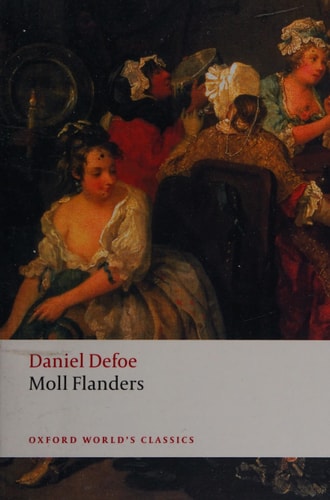
Oxford University Press
2009
Oxford University Press
1998

Everymans Library
1993
Oxford University Press
1971
Similar Books







Reader Comments
Share Your Thoughts
No comments yet. Be the first to share your thoughts!