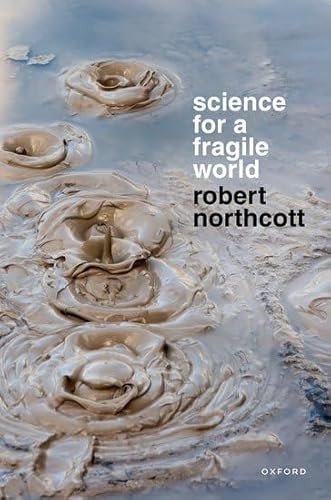
Science for a Fragile World
0
0
As an Amazon Associate and affiliate partner, Menrva Books earns from qualifying purchases. Learn more
Author Description
Imagine Two Worlds. In One, Laws, Causal Relations, And Mechanisms Are Stable. In The Other, They Are Fragile And Unreliable. Our Actual World Is An Interlocking Mixture Of The Two, But For Many Of The Things We Care About Most, The Relations That Matter Are Fragile, And This Transforms Methodology. Because We Cannot Rely On An Explanation That Worked In One Case Still Working In Another, Fragility Requires Us To Re-establish Empirical Warrant Each Time. This Makes The Case Worker Central, Not The Theorist. And Although Theory Is Still Essential, Now It Must Be Developed In A Fragility-appropriate Way, Which Means Via Continuous Empirical Refinement Rather Than More Abstractly. A Lot Follows From This. Fragility Tells Against Many Uses Of Laboratory Experiments, Statistical Methods, And Big Data, While It Tells In Favor Of Qualitative Methods. It Suggests A New View Of Scientific Expertise. And The Classic Scientific Realism Debate Is Circumscribed Because It Applies Only To Half Of Science - The Stable Half. Fragility Also Tells Against Common Practices In Economics, Ecology, Epidemiology, And Other Field Sciences, Especially The Mistaken Urge To Build Grand, Universal Theories. At The Same Time, It Calls Attention To And Lionizes Much Other, Ingenious Work In These Fields That Is Effective Despite Difficult Circumstances. A Philosophy Of Science Attuned To Fragility Gives Us A New Handle On Science
Menrva's Summary
THE THESIS
This book investigates how the inherent fragility of causal relations and mechanisms in our world necessitates a fundamental shift in scientific methodology. Robert Northcott, a philosopher of science, argues that because many phenomena are unstable and context-dependent, the traditional reliance on universal theories is often misplaced. He proposes a framework that prioritizes empirical warrant and case-specific analysis over abstract theoretical modeling, suggesting that science must adapt its tools to account for the unpredictable nature of its subjects.
THE SCOPE MAP
What You Will Find
- A critique of the reliance on laboratory experiments, statistical methods, and big data in unstable environments.
- An argument for the increased importance of qualitative methods and case-based research.
- A re-evaluation of scientific expertise and the limits of scientific realism.
- Analysis of practices in economics, ecology, and epidemiology.
Scope Limits
- The book does not provide a comprehensive guide to every scientific discipline.
- It does not abandon theory entirely, but rather seeks to redefine how theory is developed and applied.
THE AUTHORITY PERSPECTIVE
Experts in the philosophy of science recognize this work as a significant challenge to the dominance of universalist scientific modeling. Readers frequently note the academic density of the prose, which is best suited for those already familiar with debates surrounding scientific realism and methodology.
Page Count:
224
Publication Date:
2025-11-28
Publisher:
Oxford University Press
ISBN-10:
0192849085
ISBN-13:
9780192849083
Politics
Philosophy
Non-Fiction
Philosophy of
Science Policy
Philosophy history
Epistemology