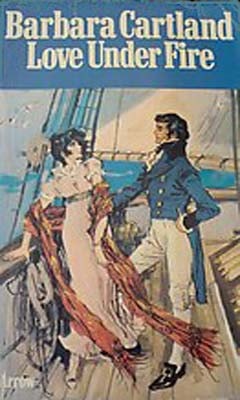
Love Under Fire
0
0
As an Amazon Associate and affiliate partner, Menrva Books earns from qualifying purchases. Learn more
Author Description
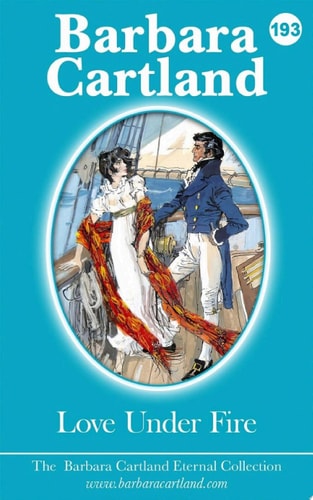
THE STOWAWAY Elvina stood before the ship's captain feeling more afraid than she'd guessed she would. She watched him appraise her black hair, dyed the night before her skin darkened with berry juice, her skinny frame of a figure. She could see that he believed her story--that she was an orphaned Portuguese child. "What is your name?" he asked. "Elvina?" she said. "What is your surname?" "I haven't one," she lied. "Everyone has a surname," he said patiently. "Come child, why can't you answer my question?" "It is a lady's privilege," Elvina said with a toss of her head, "to be unpredictable." With that Lord Wye laughed heartily. "I am ashamed to admit it," he told her frankly, "but I think I shall enjoy having you aboard..."
Menrva's Summary
THE PULSE
Elvina, a young woman in disguise, secures passage on a ship by deceiving Lord Wye, setting the stage for a high-stakes game of secrets and attraction. Elvina adopts a false identity as an orphaned Portuguese child to escape her current circumstances, utilizing a physical disguise of dyed hair and darkened skin to evade detection. Her primary objective is to maintain this ruse while navigating the confined environment of the ship, where she must contend with the scrutiny of Lord Wye. The narrative follows her attempts to balance her fabricated persona against the growing interest of the captain, creating a tension between her need for safety and the risks of exposure. The story is presented through a third-person perspective that focuses on the interplay between the two leads.
INSIDE THE PAGES
- Deceptive identity as a central plot device
- Nautical setting providing a confined environment
- Focus on verbal sparring and wit
- Romantic tension between disparate social classes
- Historical period atmosphere
- Character-driven dialogue
- High stakes regarding the discovery of the protagonist's secret
- Exploration of gender dynamics in the 19th century
THE COLLECTIVE ECHO
Readers frequently highlight the lighthearted and fast-paced nature of this narrative, which is characteristic of the author's extensive body of work. Discussion often centers on the chemistry between the two protagonists and the effectiveness of the shipboard setting in heightening the romantic stakes. Critics often note the focus on character interaction over complex world-building, emphasizing the charm of the dialogue. Many readers appreciate the straightforward structure and the classic tropes employed to drive the central conflict forward. The book is generally regarded as a quintessential example of the author's style, appealing to those who enjoy traditional historical romance.
Page Count:
192
Publication Date:
1970-01-01
Publisher:
Arrow Bks.
ISBN-10:
0090029607
ISBN-13:
9780090029600
Romance
Adventure
Historical Romance
Regency Romance