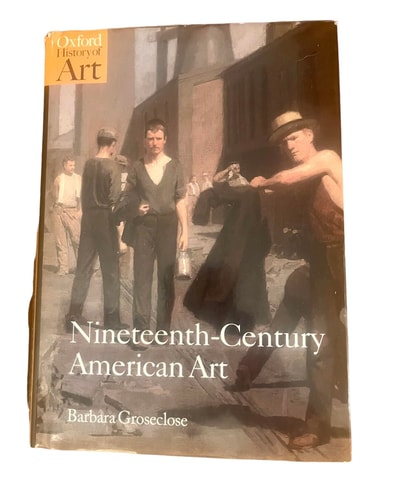
Nineteenth-Century American Art
0
0
As an Amazon Associate and affiliate partner, Menrva Books earns from qualifying purchases. Learn more
Author Description
This innovative introduction examines the profession of the nineteenth-century American artist and audience reception of their work. Works of art by familiar names such as Thomas Eakins and Winslow Homer are discussed in detail within the larger arena of visual culture, as are key works by recently discovered artists such as Harriet Hosmer. The thematic approach focuses on portraiture, landscape painting, the American West, and commemorative art, then goes on to examine the ways in which painters responded to major social and economic changes resulting from the rapid transformation from an agriculturally-based former colony to an industrialized imperial power with an evolving democracy.
Menrva's Summary
THE THESIS
This text investigates how the professional identity of the nineteenth-century American artist and the reception of their work evolved alongside the nation's rapid transformation from an agrarian society to an industrialized global power. Barbara Groseclose, a scholar of American art, utilizes a thematic framework to analyze how visual culture reflected the shifting social, economic, and political landscape of the United States. By integrating both canonical figures and marginalized artists, the author provides a comprehensive examination of the intersection between artistic production and national identity.
THE SCOPE MAP
What You Will Find
- Analysis of portraiture, landscape painting, and commemorative art
- Examination of the American West as a thematic subject
- Contextualization of art within the rise of American industrialization and imperialism
- Comparative studies of established artists like Thomas Eakins and Winslow Homer alongside figures such as Harriet Hosmer
Scope Limits
- The text does not provide an exhaustive catalog of every American artist active during the century
- It focuses primarily on visual arts rather than architecture or decorative arts
THE AUTHORITY PERSPECTIVE
Scholars and students frequently cite this work as a foundational introduction to the complexities of nineteenth-century American visual culture. Readers often note the clarity of the thematic approach, which effectively bridges the gap between individual artistic achievement and broader historical trends.
Page Count:
240
Publication Date:
2002-02-01
Publisher:
Oxford University Press
ISBN-10:
019284282X
ISBN-13:
9780192842824
Non-Fiction
Art History
Visual Culture
19th Century
American History
Art american
Community Tags
Similar Books