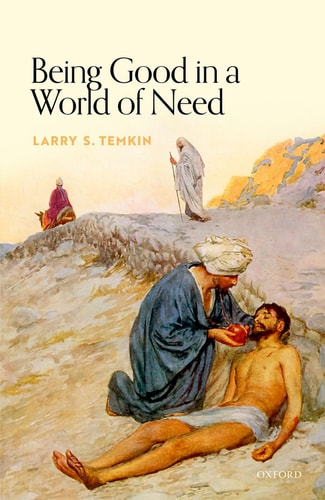
Being Good in a World of Need
0
0
As an Amazon Associate and affiliate partner, Menrva Books earns from qualifying purchases. Learn more
Author Description
In a world filled with both enormous wealth and pockets of great devastation, how should the well-off respond to the world's needy?This is the urgent central question of Being Good in a World of Need. Larry S. Temkin, one of the world's foremost ethicists, challenges common assumptions about philanthropy, his own prior beliefs, and the dominant philosophical positions of Peter Singer and Effective Altruism. Filled with keen analysis and insightful discussions of philosophy, current events, development economics, history, literature, and age-old wisdom, this book is a thorough and sobering exploration of the complicated ways that global aid may incentivize disastrous policies, reward corruption, and foster “brain drains” that hinder social and economic development.Using real-world examples and illuminating thought experiments, Temkin discusses ethical imperialism, humanitarian versus developmental aid, how charities ignore or coverup negative impacts, replicability and scaling-up problems, and the views of the renowned economists Angus Deaton and Jeffrey Sachs, all within the context of deeper philosophical issues of fairness, responsibility, and individual versus collective morality. At times both inspiring and profoundly disturbing, he presents the powerful argument that neglecting the needy is morally impermissible, even as he illustrates that the path towards helping others is often fraught with complex ethical and practical perils. Steeped in empathy, morality, pathos, and humanity, this is an engaging and eye-opening text for any reader who shares an intense concern for helping others in need.
Menrva's Summary
THE THESIS
How should individuals in wealthy nations ethically respond to the existence of global poverty and systemic need? Larry S. Temkin, a prominent philosopher, utilizes his extensive background in practical ethics to challenge prevailing philanthropic models, including those championed by Peter Singer and the Effective Altruism movement. By synthesizing development economics, historical data, and philosophical inquiry, Temkin argues that traditional aid often produces unintended negative consequences, such as incentivizing corruption or hindering local development, thereby complicating the moral imperative to assist others.
THE SCOPE MAP
What You Will Find
- Analysis of the unintended consequences of global aid, including brain drain and policy distortion.
- Comparative evaluation of humanitarian versus developmental aid frameworks.
- Critical review of prominent economic perspectives from figures like Angus Deaton and Jeffrey Sachs.
- Philosophical examination of individual versus collective moral responsibility.
Scope Limits
- The text does not provide a prescriptive manual for specific charitable giving.
- It does not focus on the internal operations of individual non-profit organizations.
THE AUTHORITY PERSPECTIVE
Experts recognize this work as a significant contribution to the discourse on practical ethics, noting its willingness to challenge established philanthropic dogmas. Readers frequently highlight the text's academic rigor and its ability to bridge the gap between abstract philosophical theory and the complex realities of global development economics.
Page Count:
432
Publication Date:
2022-04-27
Publisher:
Oxford University Press
ISBN-10:
0192849972
ISBN-13:
9780192849977
Philosophy
Politics
Economics
Social Science
New Used & Rental Textbooks
Ethics & Morality
Philanthropy
Ethics
Social Philosophy
Community Tags
Other Editions(3)


Similar Books







Reader Comments
Share Your Thoughts
No comments yet. Be the first to share your thoughts!