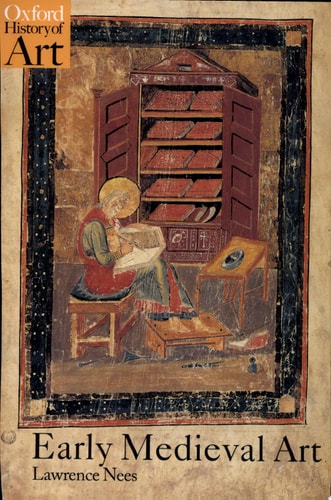
Early Medieval Art
0
0
As an Amazon Associate and affiliate partner, Menrva Books earns from qualifying purchases. Learn more
Author Description
In the first millennium, a rich and distinctive artistic tradition emerged in Europe. Early Medieval Art explores this tradition and tracks its development from c. 300 AD through c. 1000 AD, revealing forms of artistic expression ranging from brilliant illuminated manuscripts to decorative chairs, rich embroidery, and precious metalwork.Nees explores issues of artist patronage, craftsmanship, holy men and women, monasteries, secular courts, and the expressive and educational roles of artistic creation. Instead of treating early Christian art in the late Roman tradition and the arts of the newly established kingdoms of northern Europe as opposites, he adopts a more holistic view, treating them as different aspects of a larger historical situation. This approach reveals the onset of an exciting new visual relationship between the church and the populace throughout medieval Europe. Moreover, it restores a previously marginalized subject to a central status in our artistic and cultural heritage.
Menrva's Summary
THE THESIS
This work investigates the development of artistic traditions in Europe during the first millennium, specifically from 300 AD to 1000 AD. Lawrence Nees, a scholar of medieval art, utilizes a holistic framework to examine how early Christian art and the arts of northern European kingdoms intersected. By analyzing patronage, monastic influence, and secular court dynamics, the author argues that these diverse artistic expressions represent a unified visual evolution within the church and society.
THE SCOPE MAP
What You Will Find
- Analysis of illuminated manuscripts, embroidery, and metalwork
- Examination of the relationship between church authority and artistic production
- Historical context regarding monasteries and secular courts
Scope Limits
- Does not cover the Romanesque or Gothic periods following the year 1000 AD
- Focuses primarily on European artistic traditions rather than global medieval art
THE AUTHORITY PERSPECTIVE
Experts recognize this text as a comprehensive survey that successfully integrates marginalized artistic forms into the broader narrative of European cultural history. Readers frequently note the academic density of the prose, which serves as a foundational resource for students and scholars of the period.
Page Count:
272
Publication Date:
2002-01-01
Publisher:
Oxford University Press
ISBN-10:
0192842439
ISBN-13:
9780192842435
Art medieval
Art History
European History
Academic
Christian Art