Colossus: The First Electronic Computer
0
0
As an Amazon Associate and affiliate partner, Menrva Books earns from qualifying purchases. Learn more
Author Description
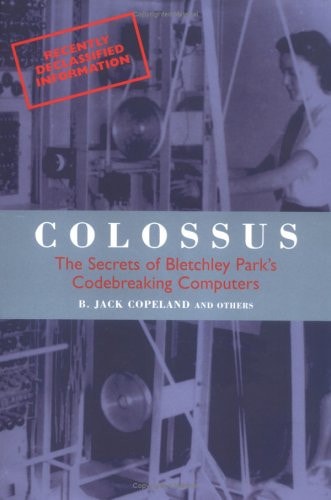
The American ENIAC is customarily regarded as having been the starting point of electronic computation. This book rewrites the history of computer science, arguing that in reality Colossus--the giant computer built by the British secret service during World War II--predates ENIAC by two years.Colossus was built during the Second World War at the Government Code and Cypher School at Bletchley Park. Until very recently, much about the Colossus machine was shrouded in secrecy, largely because the code-breaking algorithms that were employed during World War II remained in use by the British security services until a short time ago. In addition, the United States has recently declassified a considerable volume of wartime documents relating to Colossus. Jack Copeland has brought together memoirs of veterans of Bletchley Park--the top-secret headquarters of Britain's secret service--and others who draw on the wealth of declassified information to illuminate the crucial role Colossus played during World War II. Included here are pieces by the former WRENS who actually worked the machine, the scientist who pioneered the use of vacuum tubes in data processing, and leading authorities on code-breaking and computer science.A must read for anyone curious about code-breaking or World War II espionage, Colossus offers a fascinating insider's account of the world first giant computer, the great great grandfather of the massive computers used today by the CIA and the National Security Agency.
Menrva's Summary
THE THESIS
This book investigates the historical origins of electronic computation by challenging the conventional narrative that the American ENIAC was the first electronic computer. Author Jack Copeland, a scholar in the field of computer history, utilizes newly declassified wartime documents and firsthand accounts from Bletchley Park veterans to argue that the British Colossus machine predates ENIAC by two years. The text provides a technical and historical framework to re-evaluate the development of early computing and its role in wartime intelligence operations.
THE SCOPE MAP
What You Will Find
- Historical analysis of the Government Code and Cypher School at Bletchley Park
- Technical documentation regarding the use of vacuum tubes in early data processing
- Memoirs and personal accounts from the WRENS and scientists who operated the Colossus
- Examination of declassified wartime intelligence documents
Scope Limits
- The book does not provide a comprehensive history of all post-war computing developments
- It does not focus on the commercialization of early computers outside of the military and intelligence sectors
THE AUTHORITY PERSPECTIVE
Experts and historians recognize this work as a significant contribution to the historiography of computer science for its use of previously restricted primary sources. Readers frequently note the technical detail provided regarding the machine's architecture and the operational realities of wartime code-breaking.
Page Count:
480
Publication Date:
2006-05-04
Publisher:
Oxford University Press
ISBN-10:
019284055X
ISBN-13:
9780192840554
Biography
History
Computer Science
World War
Technology
Cryptography
Computers
Community Tags
Similar Books