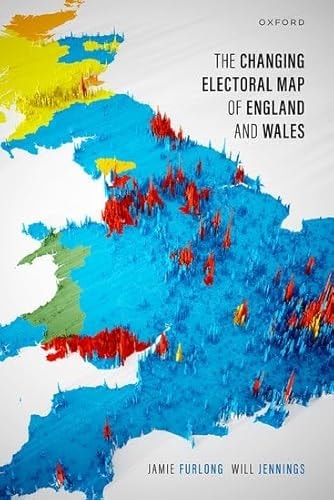
Changing Electoral Map of England and Wales
0
0
As an Amazon Associate and affiliate partner, Menrva Books earns from qualifying purchases. Learn more
Author Description
This Book Offers A Definitive Account Of The Changing Electoral Geography Of England And Wales Over The Past Half Century. Changes In Social And Economic Structure Have Altered The Spatial Distribution Of Voters And Combined With Changes In The Parties' Appeal To Those Voters (and The Behaviour Of Voters) Has Led To A Gradual, Though Recently Accelerating, Realignment In The Geographical Basis Of Electoral Competition. Constituency-level Analysis Of Voting At General Elections Between 1979 And 2019 Shows A Swing From Labour To The Conservatives In Demographically Left Behind Areas With Largely White, Working-class Populations And Lower Levels Of Educational Attainment, While Labour's Support Has Remained Stable In Places Characterised By Economic Deprivation (economically Left Behind Areas) And Insecure Employment (precariously Left Behind Areas). Areas With Improving Socioeconomic Characteristics - Typically Cities Where Labour Have Inefficiently Stacked Up Votes - Have Swung Towards Labour, Whereas Those That Have Experienced Population And Economic Decline Have Swung Towards The Conservatives. Yet Not All Areas Follow These Trends. Spatial Analysis Reveals Clusters Of Seats Where Each Party Has More Support Than Expected Based On Sociodemographic Composition - Places Where, In Short, Place Matters. In Merseyside, Labour's Vote Is Much Higher Than Predicted By Demographics, While This Is Likewise The Case For The Conservatives In Lincolnshire. Qualitative Case Studies Identify The Place-based, Contextual Factors That Help Explain The Unusual Political Characteristics In These Places. The Book Argues For The Need To Recognise The Importance Of People, Places, And Parties In Shaping The Geography Of Electoral Outcomes-- Provided By Publisher.
Menrva's Summary
THE THESIS
This book investigates the shifting geographical basis of electoral competition in England and Wales over the past fifty years. Authors Jamie Furlong and Will Jennings utilize constituency-level voting data from general elections between 1979 and 2019 to analyze how socioeconomic changes and party appeal have realigned the political landscape. The work argues that while demographic factors are significant, local context and place-based identity remain critical variables in determining electoral outcomes.
THE SCOPE MAP
What You Will Find
- Longitudinal analysis of voting patterns from 1979 to 2019.
- Quantitative assessment of socioeconomic variables including educational attainment and employment security.
- Qualitative case studies of specific regions such as Merseyside and Lincolnshire.
- Spatial analysis identifying clusters where political support deviates from demographic expectations.
Scope Limits
- The study is strictly limited to the electoral geography of England and Wales.
- It does not provide a comprehensive analysis of Scottish or Northern Irish electoral trends.
THE AUTHORITY PERSPECTIVE
Experts recognize this text as a rigorous empirical examination of British electoral realignment. Scholars frequently highlight the authors' ability to balance broad statistical trends with nuanced, place-specific qualitative insights.
Page Count:
0
Publication Date:
2024-01-01
Publisher:
Oxford University Press
ISBN-10:
0192847953
ISBN-13:
9780192847959
Data Analysis
Sociology
Electoral geography
British Politics
Community Tags
Similar Books