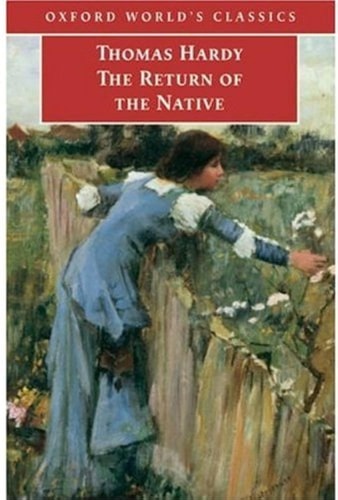
The Return of the Native
0
0
As an Amazon Associate and affiliate partner, Menrva Books earns from qualifying purchases. Learn more
Author Description
In Hardy's The Return of the Native, Eustacia Vye criss-crosses the wild Egdon Heath, eager to experience life to the full in her quest for "music, poetry, passion, war." She marries Clym Yeobright, a native of the heath, but his idealism frustrates her romantic ambitions and her discontent draws others into a tangled web of deceit and unhappiness. Early readers responded to Hardy's "insatiably observant" descriptions of the heath, a setting that for D. H. Lawrence provided the "real stuff of tragedy." For modern readers, the tension between the mythic setting of the heath and the modernity of the characters challenges our freedom to shape the world as we wish; like Eustacia, we may not always be able to live our dreams.This edition has the only critical text based on the manuscript and first edition, and without the later changes that substantially altered Hardy's original intentions. The new introduction by critic Margaret R. Higonnet is the most critically up-to-date discussion of the novel available and considers the mythic nature of the heath opposed to the modernity of the characters, the economic vocabulary of value and investment, the novel's classical structure, and Hardy's cinematic techniques.
Menrva's Summary
THE PULSE
Eustacia Vye’s arrival back at Egdon Heath initiates a volatile sequence of events driven by her desire for a life beyond the desolate landscape. The protagonist seeks to escape the confines of her environment through marriage to Clym Yeobright, whose own aspirations for a simpler life clash with her romanticized expectations. As their relationship deteriorates, the narrative explores the friction between individual ambition and the rigid social and physical constraints of the heath. Hardy employs a third-person omniscient perspective to examine the characters' psychological states against the backdrop of a landscape that functions as a central, indifferent force.
INSIDE THE PAGES
- Detailed, atmospheric descriptions of Egdon Heath as a symbolic entity
- Exploration of the conflict between traditional rural values and modern idealism
- Use of classical tragedy structures to frame the narrative arc
- Examination of economic metaphors regarding human value and social investment
- Cinematic techniques in scene composition and visual pacing
- Focus on the psychological interiority of characters trapped by circumstance
- Interplay between fatalism and individual agency
- Emphasis on the limitations imposed by social class and geography
THE COLLECTIVE ECHO
Discussion often centers on the role of Egdon Heath as a character in its own right, with many readers noting how the environment dictates the tragic trajectory of the protagonists. Critics frequently highlight Hardy’s precise, observant prose and his ability to weave mythic qualities into a realistic setting. Readers often debate the motivations of Eustacia Vye, questioning whether she represents a victim of her environment or an architect of her own misfortune. The balance between the novel's slow, atmospheric pacing and its sudden, violent shifts in fortune remains a frequent point of analysis for those studying Victorian literature. Scholars continue to examine the text for its proto-modernist elements and its critique of the rigid social structures of the nineteenth century.
Page Count:
488
Publication Date:
2005-03-17
Publisher:
Oxford University Press
ISBN-10:
019284072X
ISBN-13:
9780192840721
Rural
Realism
Classic Literature
Wessex England
England
Tragedy
Victorian
Community Tags
Other Editions(41)
Left of Brain Books
2024
Default edition
Independently Published
2021

Independently Published
2019

CreateSpace Independent Publishing Platform
2018

CreateSpace Independent Publishing Platform
2017
CreateSpace Independent Publishing Platform
2017
CreateSpace Independent Publishing Platform
2017

CreateSpace Independent Publishing Platform
2017

CreateSpace Independent Publishing Platform
2017

CreateSpace Independent Publishing Platform
2016

CreateSpace Independent Publishing Platform
2016

Creative Media Partners, LLC
2015
Creative Media Partners, LLC
2015
Creative Media Partners, LLC
2015

CreateSpace Independent Publishing Platform
2015
CreateSpace Independent Publishing Platform
2014
CreateSpace Independent Publishing Platform
2014
CreateSpace Independent Publishing Platform
2013

BBC Audiobooks America
2013

Reprint Services Corporation
2013

Classic Books
2013

Penguin UK
2012

Vintage
2010

Blackstone Audio Inc.
2007
Oxford University Press
2005
Penguin Books, Limited
2003

Classic Books
2001
Prentice Hall
1999

Ags Pub
1994

Buccaneer Books, Incorporated
1992
Oxford University Press
1990
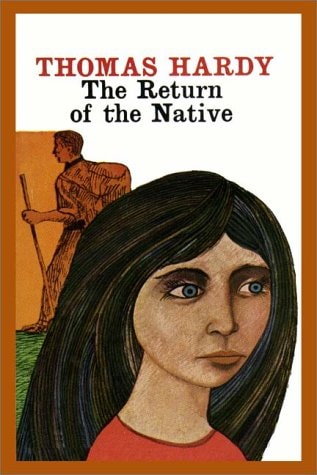
Books on Tape, Inc.
1983
Turtleback
1981
Franklin Library
1980
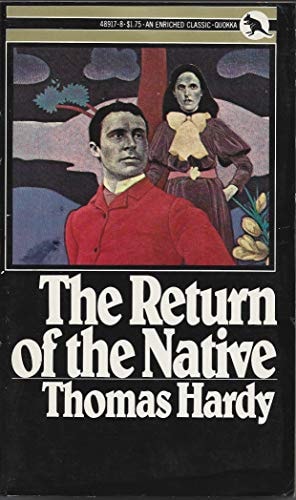
Pocket Books
1978

Pendulum Press, Incorporated
1978

Washington Square Press
1972

Macmillan
1972

AMSCO School Publications, Incorporated
1970

Penguin Group USA, Incorporated
1959

Classic Textbooks
1922
Similar Books

Reader Comments
Share Your Thoughts
No comments yet. Be the first to share your thoughts!