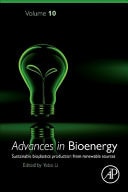
Sustainable Bioplastics Production from Renewable Sources
0
0
As an Amazon Associate and affiliate partner, Menrva Books earns from qualifying purchases. Learn more
Author Description
Sustainable Bioplastics Production from Renewable Sources, Volume 10 in the Advances in Bioenergy series, highlights new advances in the field, with this new volume presenting interesting chapters on topics such as Polyhydroxyalkanoates (PHA) production from waste plastic, Haloferax mediterranei for bioplastics production from wasted materials: potential, opportunities, and challenges, Polyhydroxyalkanoates (PHAs) recovery and extraction, Advancements, Applications, and Challenges of Polyhydroxyalkanoates (PHAs) in Packaging as Biodegradable Bioplastics, Assessing the environmental impact of polyhydroxyalkanoates (PHA)-based bioplastic utilization, TEA and LCA for polyhydroxyalkanoates (PHA) production from organic wastes, and much more. Other sections cover Biobased polycarbonate production from CO2 and Biobased Polyols and Polyurethane Production from Algae.
Menrva's Summary
THE THESIS
This volume investigates the latest advancements in producing bioplastics from renewable resources, addressing key challenges and opportunities in the field. The book details novel methods for bioplastic production, including the use of waste materials like plastic and organic waste for Polyhydroxyalkanoates (PHA) synthesis. It explores the recovery and extraction processes for PHAs, their applications, particularly in packaging, and assesses their environmental impact. Additionally, it covers the production of biobased polycarbonates from CO2 and biobased polyols and polyurethanes from algae, offering a comprehensive overview of sustainable bioplastic technologies.
THE SCOPE MAP
- Production of Polyhydroxyalkanoates (PHA) from waste plastic
- Utilization of Haloferax mediterranei for bioplastics from wasted materials
- Recovery and extraction methods for Polyhydroxyalkanoates (PHAs)
- Advancements, applications, and challenges of Polyhydroxyalkanoates (PHAs) in packaging
- Environmental impact assessment of Polyhydroxyalkanoates (PHA)-based bioplastic utilization
- Techno-economic analysis (TEA) and Life Cycle Assessment (LCA) for PHA production from organic wastes
- Biobased polycarbonate production from CO2
- Biobased Polyols and Polyurethane Production from Algae
THE AUTHORITY PERSPECTIVE
As Volume 10 in the Advances in Bioenergy series, this book is positioned as a technical compilation of recent research. The chapter topics suggest a focus on specific production methods, material properties, and environmental assessments relevant to researchers and industry professionals in the bioplastics sector. The inclusion of techno-economic and life cycle analyses indicates a practical, application-oriented approach to the subject matter. The breadth of topics covered, from waste utilization to novel material sources, points to a comprehensive resource for those involved in sustainable materials science.
Page Count:
258
Publication Date:
2025-08-28
Publisher:
Elsevier Science
ISBN-10:
0443344418
ISBN-13:
9780443344411
Non-Fiction
Science
Science & Technology
Sustainability
Biotechnology
Community Tags
Similar Books