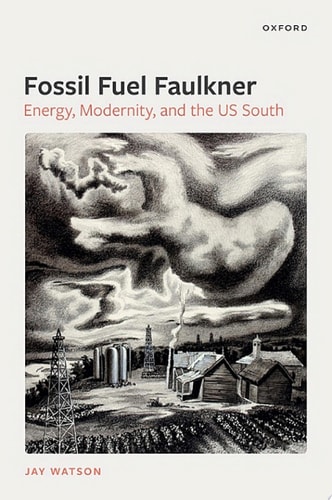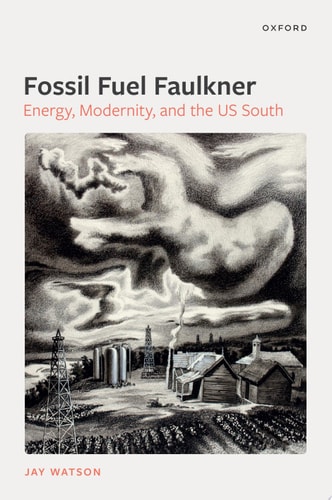
Fossil-Fuel Faulkner: Energy, Modernity, and the US South
0
0
As an Amazon Associate and affiliate partner, Menrva Books earns from qualifying purchases. Learn more
Author Description
Fossil-Fuel Faulkner is the first book-length study of a single writer in the emerging field of the energy humanities. As we try to imagine our way beyond a deeply problematic fossil energy regime that depletes and degrades the planet and sharpens the gap between Global North and Global South and move toward as more just and sustainable energy future, there is much to learn from how previous generations imagined the modern transition into a hydrocarbon-fueled world from the solar- and muscle-powered order that preceded it, and from how they imagined the consequences of that transition, including the new cultural forms it elicited and the new social problems it created.Jay Watson turns to the life and writings of William Faulkner, creator of one of the richest imaginative landscapes in American literary history, for new insights into the deep-reaching connections linking the extraction, production, and use of energy resources in his native US South to its histories of slavery and Jim Crow, its ecologies of disruption and despoilation, the logic of its cultural practices, and the nuances of literary form. Surveying the author's personal and imaginative engagements with coal and oil, with modern automobility and the road narrative, and with the profligate energies of the sun and the human animal, Fossil-Fuel Faulkner explores nearly all of Faulkner's novels and over a dozen of his short stories, and reveals the author to be one of petromodernity's keenest chroniclers and critics.
Menrva's Summary
THE THESIS
This study investigates how the literary works of William Faulkner document and critique the transition of the American South into a hydrocarbon-fueled society. Jay Watson, a scholar of Southern literature, utilizes the framework of the energy humanities to analyze the intersection of fossil fuel consumption with historical power structures. By examining Faulkner's extensive bibliography, Watson argues that the author provides a critical record of how energy regimes shaped social hierarchies, ecological conditions, and modern cultural forms.
THE SCOPE MAP
What You Will Find
- Analysis of the transition from solar and muscle-powered labor to petromodernity.
- Examination of the connections between energy extraction and the histories of slavery and Jim Crow.
- Exploration of Faulkner's treatment of coal, oil, and automobility in his novels and short stories.
Scope Limits
- The analysis is strictly confined to the literary output and personal engagements of William Faulkner.
- The text does not provide a general history of energy policy outside of its relation to Faulkner's imaginative landscape.
THE AUTHORITY PERSPECTIVE
Experts identify this work as a pioneering contribution to the energy humanities, noting its success in applying environmental theory to canonical American literature. Scholars frequently highlight the text's ability to bridge the gap between historical socio-economic analysis and literary formalist critique.
Page Count:
272
Publication Date:
2023-02-03
Publisher:
Oxford University Press
ISBN-10:
0192855611
ISBN-13:
9780192855619
Southern Studies
American
Ecocriticism
Energy Humanities
Literary Criticism