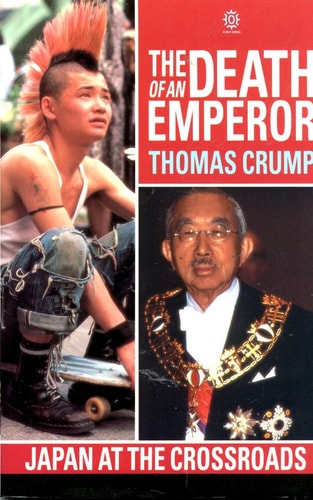
The Death of an Emperor: Japan at the Crossroads
0
0
As an Amazon Associate and affiliate partner, Menrva Books earns from qualifying purchases. Learn more
Author Description
Hirohito was the last Japanese Emperor to claim divine status, and his death in 1989 not only saw the end of a 63-year reign, but also brought into question the entire future of the monarchy. Three critical factors in traditional life relating to the role of the Emperor are now open to change. Firstly the extent to which the gods of Shinto determine the fortunes of the nation. Secondly the way in which the goodwill of the gods depends on there being an Emperor, and finally the Emperor's role in the seasonal rites which determine the success of the rice harvest. Thomas Crump's study of Japan at the crossroads assesses the political and cultural decisions that now have to be made and considers the options open to the new Emperor, Akihito.
Menrva's Summary
THE THESIS
This work investigates the existential crisis facing the Japanese monarchy following the death of Emperor Hirohito and the transition to a modern, secularized state. Thomas Crump, an anthropologist and scholar of Japanese society, utilizes historical analysis and cultural observation to examine how the end of the Showa era necessitated a re-evaluation of the Emperor's divine status. The text argues that the transition to Akihito's reign forced a confrontation between ancient Shinto traditions and the requirements of a contemporary democratic nation.
THE SCOPE MAP
What You Will Find
- Historical analysis of the 63-year reign of Emperor Hirohito
- Examination of the intersection between Shinto religious rites and national identity
- Assessment of the political and cultural pressures on the Imperial House
- Comparative analysis of traditional agrarian rituals versus modern governance
Scope Limits
- The text does not provide a comprehensive biography of the entire Imperial lineage
- It does not offer speculative predictions regarding the long-term survival of the monarchy beyond the immediate post-1989 transition
THE AUTHORITY PERSPECTIVE
Experts recognize this text as a focused examination of a specific transitional period in Japanese history. Readers frequently note that the prose maintains an academic tone suitable for those interested in the intersection of religion and statecraft.
Page Count:
280
Publication Date:
1991-08-15
Publisher:
Oxford University Press
ISBN-10:
0192852426
ISBN-13:
9780192852427
History
Emperors japan
Monarchy
Shinto
Japanese History
Community Tags
Similar Books