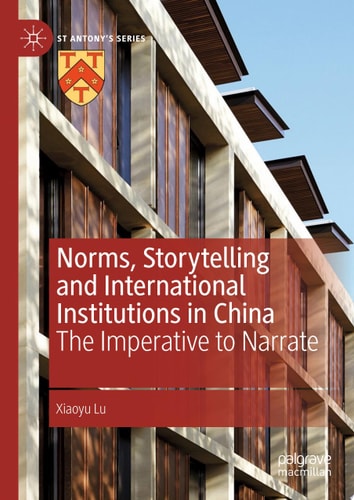
Norms, Storytelling and International Institutions in China
0
0
As an Amazon Associate and affiliate partner, Menrva Books earns from qualifying purchases. Learn more
Author Description
This book is a political ethnography of norm diffusion and storytelling through international institutions in China. It is driven by intellectual puzzles and realpolitik questions: are we converging or diverging on values? Do emerging powers reinforce or reshape the existing international order? Are international institutions socialising emerging powers or being used to promote alternative norms? This book addresses these questions through fieldwork research over three years at the United Nations Development Programme in China, the first international development agency to enter post-reform China in 1979. It provides a crucial case to study the everyday practices of norm diffusion in emerging powers, and highlights the central role of storytelling in translating and contesting normative scripts. The book selects norms in human rights, rule of law and development cooperation to analyse how translators and brokers innovatively use stories to advocate, and how these normative stories move back-and-forth between local-global spaces and orders. "A fascinating ethnography that tells us much about international institutions and China's changing role in the world: of interest both to China specialists and theorists of international relations." —Rana Mitter, Director of the University of Oxford China Centre, University of Oxford, UK “Through pioneering ethnographic research, Xiaoyu Lu’s outstanding book makes a major contribution to our understanding of norm diffusion and the ways in which China is shaping, and is shaped by, international development norms. Lu’s richly textured analysis shows how ‘norm translators’ use case studies, personal stories, and other narratives to negotiate between global and local normative orders, and to facilitate the day-to-day processes of norm diffusion." —Amy King, Associate Professor, Strategic and Defence Studies Centre, Australian National University, Australia "An intricate account of the everyday politics in international development in
Menrva's Summary
THE THESIS
This book investigates the complex interplay between international institutions, norm diffusion, and storytelling within China. It examines how emerging powers like China engage with global norms, questioning whether they reinforce or reshape the existing international order and whether international institutions socialize these powers or are used to promote alternative norms. Through three years of fieldwork at the United Nations Development Programme in China, the author provides a detailed political ethnography of these processes. The analysis focuses on norms in human rights, rule of law, and development cooperation, highlighting the innovative use of narratives by translators and brokers to advocate for these norms across local and global spaces.
THE SCOPE MAP
- A political ethnography of norm diffusion and storytelling in China.
- Analysis of fieldwork conducted over three years at the United Nations Development Programme in China.
- Exploration of intellectual puzzles and realpolitik questions regarding value convergence/divergence and the role of emerging powers.
- Case studies of norms in human rights, rule of law, and development cooperation.
- Examination of how 'norm translators' and brokers use stories to advocate for norms.
- Analysis of how normative stories move between local-global spaces and orders.
THE AUTHORITY PERSPECTIVE
This book is recognized as a significant contribution to the understanding of norm diffusion and China's evolving role in international affairs. Experts like Rana Mitter praise its fascinating ethnography, noting its relevance for both China specialists and international relations theorists. Amy King highlights the pioneering ethnographic research and the book's major contribution to understanding how China shapes and is shaped by international development norms. The richly textured analysis is commended for demonstrating the use of narratives by 'norm translators' in negotiating global and local normative orders.
Page Count:
244
Publication Date:
2021-02-15
Publisher:
Springer Nature
ISBN-10:
3030567079
ISBN-13:
9783030567071
History
Non-Fiction
Politics
Sociology
International relations
Ethnography
China Studies
Community Tags
Similar Books