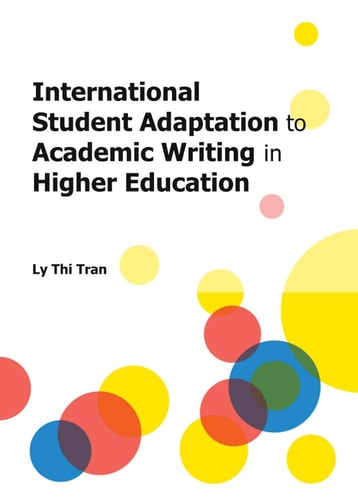
International Student Adaptation to Academic Writing in Higher Education
0
0
As an Amazon Associate and affiliate partner, Menrva Books earns from qualifying purchases. Learn more
Author Description
Academic writing is a key practice in higher education and central to international students' academic success in the country of education. International Student Adaptation to Academic Writing in Higher Education addresses the prominent forms of adaptation emerging from international students' journey to mediate between disciplinary practices, cultural norms and personal desires in meaning making. It introduces new concepts that present different patterns of international student adaptation including surface adaptation, committed adaptation, reverse adaptation and hybrid adaptation. Drawing on these concepts of adaptation, this book provides readers with new and deeper insights into the complex nature of international students' adjustment to host institutions. It works through many unresolved issues related to cross-border students' intellectual, cultural, linguistic and personal negotiations. This book presents a trans-disciplinary framework for conceptualising international students' and lecturers' practices within the institutional structure. This framework has been developed by drawing on a modified version of Lillis' heuristic of talk around text and positioning theory. The framework enables an exploration of not only the reasons underpinning international students' specific ways of meaning making, but also their potential choices in constructing knowledge. A distinctive contribution of the book is the development of a dialogical pedagogic model for mutual adaptation between international students and academics rather than the onus being on exclusive adaptation from the students. Existing research on international education indicates the significance of reciprocal adaptation between international students and academics. Yet very little has been done to conceptualise what mutual adaptation means and what is involved in this process. The dialogical model introduced in this book offers concrete steps towards developing reciprocal adaptation of international
Menrva's Summary
THE THESIS
This book investigates the multifaceted process of academic writing adaptation undertaken by international students in higher education. It explores how these students navigate the complexities of disciplinary practices, cultural norms, and personal aspirations to construct meaning within their new academic environments. The work introduces novel concepts such as surface, committed, reverse, and hybrid adaptation to categorize these adjustment patterns. By examining the intellectual, cultural, linguistic, and personal negotiations involved, the book offers a trans-disciplinary framework for understanding student and academic practices within institutional structures, drawing on positioning theory and Lillis' heuristic.
THE SCOPE MAP
- Analysis of new concepts: surface adaptation, committed adaptation, reverse adaptation, and hybrid adaptation.
- Exploration of cross-border students' intellectual, cultural, linguistic, and personal negotiations.
- Presentation of a trans-disciplinary framework for conceptualizing student and academic practices.
- Application of modified Lillis' heuristic of talk around text and positioning theory.
- Investigation into the reasons behind international students' meaning-making processes and knowledge construction choices.
- Development of a dialogical pedagogic model for mutual adaptation between students and academics.
- Discussion on the significance and conceptualization of reciprocal adaptation in international education.
THE AUTHORITY PERSPECTIVE
The book offers a novel conceptualization of international student adaptation to academic writing, introducing distinct patterns of adjustment. Its trans-disciplinary framework and dialogical pedagogic model provide a unique approach to understanding student-institution interactions. The work addresses unresolved issues in cross-border student adjustment, aiming to offer deeper insights into their meaning-making processes. The proposed model for mutual adaptation between students and academics is presented as a significant contribution to the field of international education.
Page Count:
168
Publication Date:
2013-01-01
Publisher:
Cambridge Scholars Publishing
ISBN-10:
1443848336
ISBN-13:
9781443848336
Non-Fiction
Literary Fiction
Linguistics
Higher Education
Community Tags
Similar Books