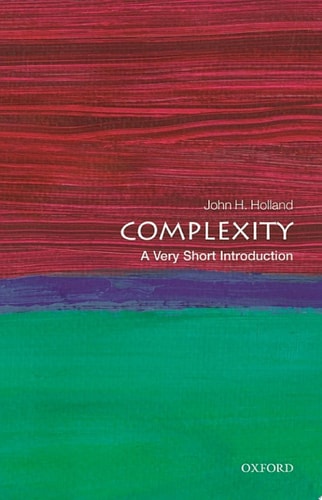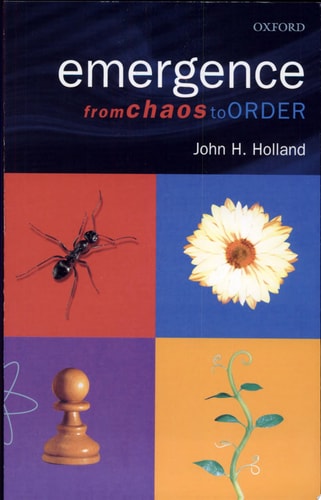
Emergence: From Chaos to Order
0
0
As an Amazon Associate and affiliate partner, Menrva Books earns from qualifying purchases. Learn more
Author Description
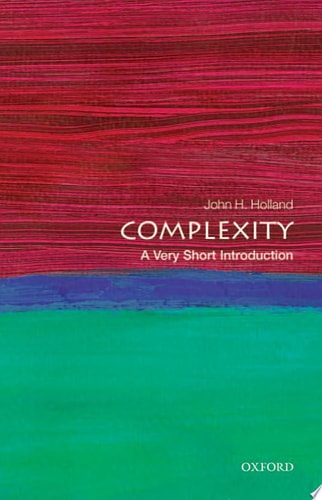
In this work, one of today's most innovative thinkers, John H. Holland, explains the theory of emergence, a simple theory that the whole is greater than the sum of its parts. Emergence demonstrates that a small number of rules or laws can generate incredibly complex systems. From the checkers-playing computer that learnt to beat its creator again and again, to a fertilized egg that can program the development of a trillion-cell organism, to the ant colonies that build bridges over chasms and navigate leaf-boats on streams, this book contains wide-ranging implications for science, business, and the arts.
Menrva's Summary
THE THESIS
This book investigates the fundamental mechanisms of emergence, proposing that complex systems arise from the interaction of a limited set of simple, underlying rules. John H. Holland, a professor of psychology and computer science, utilizes his expertise in complex adaptive systems to argue that the phenomenon of emergence is a universal principle. He synthesizes examples from biology, computer science, and social structures to demonstrate how local interactions produce global patterns that are not explicitly programmed into the individual components.
THE SCOPE MAP
What You Will Find
- Analysis of complex adaptive systems across biological and artificial domains
- Theoretical framework for understanding how simple rules generate macro-level complexity
- Case studies including ant colony behavior, developmental biology, and machine learning
Scope Limits
- The text does not provide a comprehensive mathematical proof for every biological system mentioned
- It does not offer a step-by-step manual for applying emergence theory to specific corporate management strategies
THE AUTHORITY PERSPECTIVE
Experts recognize this work as a foundational text for understanding the mechanics of complex systems. Readers frequently note the academic density of the prose, which requires careful attention to grasp the underlying theoretical concepts.
Page Count:
274
Publication Date:
2000-03-16
Publisher:
OUP Oxford
ISBN-10:
0192862111
ISBN-13:
9780192862112
Science
Applied
Mathematics
Philosophy of
Philosophy history
Systems Thinking
New Used & Rental Textbooks
Complexity Theory
Community Tags
Similar Books