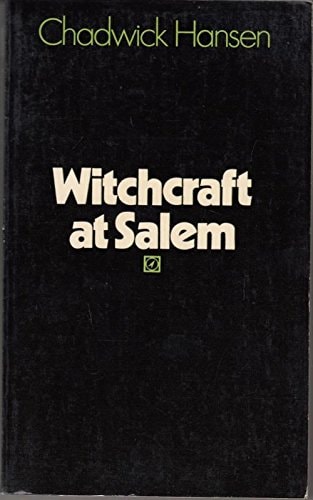
Witchcraft At Salem
0
0
As an Amazon Associate and affiliate partner, Menrva Books earns from qualifying purchases. Learn more
Author Description
Much has been written about the Salem witchcraft trials of 1692, and much has been misunderstood. "The more I studied the documents of what actually took place in the community, "writes Chadwich Hansen, "the more I found myself in opposition to the traditional interpretations. It seems to me that a serious consideration was in order." He argues, for instance, that witchcraft was actually practiced in seventeenth-century New England, as it was in Europe at the same time. Moreover, the behavior of the afflicted persons was not fraudulent, as some have claimed, but these people were hysterics in the clinical rather than the popular sense of the term. Further still, the clergy did not inspire or take advantage of the witch hunts as has been charged; on the contrary, they were among the chief opponents of the "mass hysteria." Library Journal called this book,..".The most important scholarly contribution to the literature of witchcraft to appear in many years."
Menrva's Summary
THE THESIS
This work investigates the historical reality of witchcraft in 1692 Salem, challenging long-standing interpretations of the trials as mere fraud or religious fanaticism. Chadwick Hansen, a scholar of American literature and history, utilizes primary source documents from the period to construct a revisionist argument. He posits that witchcraft was a genuine cultural practice in seventeenth-century New England and that the afflicted individuals were experiencing clinical hysteria rather than engaging in deception.
THE SCOPE MAP
What You Will Find
- Analysis of 17th-century New England social and religious structures
- Clinical interpretation of hysterical behavior in the context of the 1690s
- Re-evaluation of the role of the clergy during the trials
Scope Limits
- Does not provide a comprehensive biography of every individual involved in the trials
- Does not focus on modern psychological theories outside of the author's specific clinical framework
THE AUTHORITY PERSPECTIVE
Experts and historians frequently cite this work as a significant contribution to the study of the Salem trials due to its departure from traditional narratives. Readers often note the academic rigor of the prose and the author's willingness to challenge established historical consensus.
Page Count:
288
Publication Date:
1971-01-01
Publisher:
Arrow
ISBN-10:
0090039106
ISBN-13:
9780090039104
Religion
Horror
History
Sociology
Genre Fiction
Witchcraft