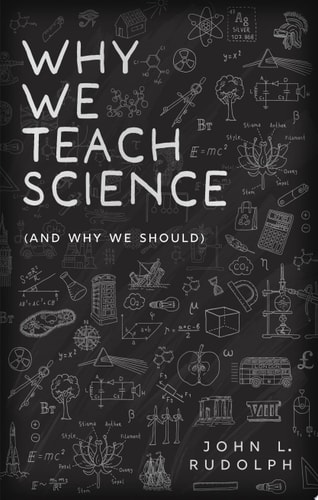
Why We Teach Science: (and Why We Should)
0
0
As an Amazon Associate and affiliate partner, Menrva Books earns from qualifying purchases. Learn more
Author Description
Few people question the importance of science education in American schooling. The public readily accepts that it is the key to economic growth through innovation, develops the ability to reason more effectively, and enables us to solve the everyday problems we encounter through knowing how the world works. Good science teaching results in all these benefits and more -- or so we think. But what if all this is simply wrong? What if the benefits we assume science education produces turn out to be an illusion, nothing more than wishful thinking?In Why We Teach Science (and Why We Should), former high school teacher and historian of science education John L. Rudolph examines the reasons we've long given for teaching science and assesses how they hold up to what we know about what students really learn (or don't learn) in science classrooms and what research tells us about how people actually interact with science in their daily lives. The results will surprise you. Instead of more and more rigorous traditional science education to fill the STEM pipeline, Rudolph challenges us to think outside the box and makes the case for an expansive science education aimed instead at rebuilding trust between science and the public -- something we desperately need in our current era of impending natural challenges and science denial.
Menrva's Summary
THE THESIS
This book investigates the validity of the long-standing justifications for science education in American schools and proposes a new framework for its future. John L. Rudolph, a former high school teacher and historian of science education, utilizes historical analysis and contemporary research on student learning to challenge the assumption that traditional science curricula inherently produce economic innovation or improved public reasoning. He argues that the current focus on the STEM pipeline is insufficient and advocates for a shift toward an educational model that prioritizes rebuilding public trust in scientific institutions.
THE SCOPE MAP
What You Will Find
- Historical analysis of the stated goals for science education in the United States
- Evaluation of research regarding actual student learning outcomes in science classrooms
- Assessment of how individuals interact with scientific information in daily life
- A proposed framework for science education focused on public trust
Scope Limits
- The book does not provide a comprehensive curriculum guide or lesson plans for teachers
- It does not focus on the technical aspects of specific scientific disciplines like biology or physics
THE AUTHORITY PERSPECTIVE
Experts in the field of education policy recognize this work as a critical intervention in the ongoing debate over STEM curriculum priorities. Readers frequently note the clarity of the author's historical perspective and the provocative nature of his arguments regarding the disconnect between classroom instruction and public scientific literacy.
Page Count:
224
Publication Date:
2023-04-19
Publisher:
Oxford University Press
ISBN-10:
0192867199
ISBN-13:
9780192867193
Science
Sociology Of Education
Science History
Pedagogy
Education
Community Tags
Similar Books