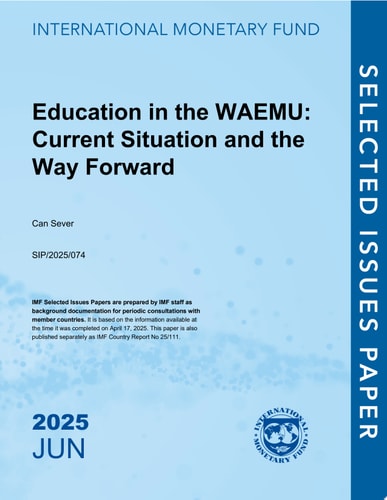
Education in the WAEMU: Current Situation and the Way Forward
0
0
As an Amazon Associate and affiliate partner, Menrva Books earns from qualifying purchases. Learn more
Author Description
This paper makes the case for prioritizing the education sector in the West African Economic and Monetary Union (WAEMU) by taking stock of the outcomes and documenting its macroeconomic relevance. Education outcomes across the WAEMU region remain relatively weak, while empirical estimates indicate that improvements could lead to large income gains. Given a young population and high fertility rate, ramping up the progress in education remains critical, including by exploring options to enhance quality, safeguarding related spending, closing gender gaps, and improving the resilience of the education systems to climate and health shocks. Beyond national efforts, regional coordination and cooperation have a crucial role in achieving better education outcomes.
Menrva's Summary
THE THESIS
This paper argues for the critical need to prioritize education within the West African Economic and Monetary Union (WAEMU). The analysis details the current state of educational outcomes across the WAEMU, highlighting their persistent weakness despite significant macroeconomic relevance. With a young and growing population, the region faces an urgent imperative to advance educational progress by enhancing quality, ensuring sustained financial commitment, addressing gender disparities, and building resilience against environmental and health crises. The paper emphasizes that while national initiatives are vital, effective regional cooperation is indispensable for achieving substantial improvements in education.
THE SCOPE MAP
- Assessment of current education outcomes in the WAEMU region.
- Documentation of the macroeconomic relevance of the education sector.
- Analysis of the impact of education improvements on income gains.
- Strategies for enhancing educational quality.
- Methods for safeguarding education spending.
- Initiatives to close gender gaps in education.
- Approaches to improve education system resilience to climate and health shocks.
- The role of regional coordination and cooperation in education.
THE AUTHORITY PERSPECTIVE
The paper presents a clear and urgent case for educational reform within the WAEMU, grounded in empirical data and macroeconomic analysis. It identifies key challenges such as weak outcomes and the need for increased resilience, while also proposing actionable strategies for improvement. The emphasis on regional cooperation underscores a pragmatic approach to tackling complex developmental issues. The analysis is likely to be of interest to policymakers, economists, and development practitioners focused on West Africa.
Page Count:
23
Publication Date:
2025-06-06
Publisher:
International Monetary Fund
ISBN-13:
9798229013697
Non-Fiction
Economics
Public Policy
Education
Community Tags
Similar Books