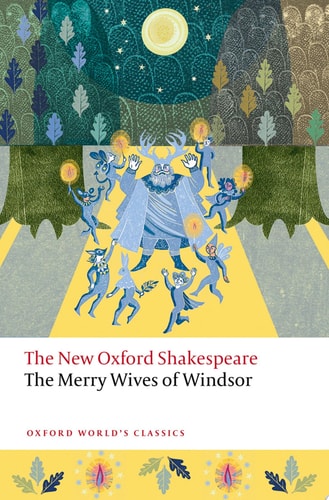
The Merry Wives of Windsor: The New Oxford Shakespeare
0
0
As an Amazon Associate and affiliate partner, Menrva Books earns from qualifying purchases. Learn more
Author Description
'Here will be an old abusing of God's patience and the King's English.'The Merry Wives of Windsor is the only Shakespeare play named entirely after female characters and his only comedy set in England. These features underscore some of its most immediately appealing qualities -- its contemporary realism; its depiction of everyday life; its interest in status and gender; and the language and physicality of its comedy. This edition's introduction focuses on these elements of Merry Wives, setting out their historical contexts but also thinking about what they offer audiences and readers today. It addresses the place of the play within Shakespeare's career and canon and the enduringly popular figure of Falstaff, before thinking about its generic peculiarities as a mixture of "city comedy" and domestic comedy. The edition gives readers a rich breadth of historical context and real-life examples through which to understand and appreciate the text. It also addresses Merry Wives's popular and scholarly reception, to give students, performers, and readers an array of topics, angles, and approaches with which to engage with one of the canon's most lively and life-like plays.The New Oxford Shakespeare offers authoritative editions of Shakespeare's works with introductory materials designed to encourage new interpretations of the plays and poems. Using the text from the landmark The New Oxford Shakespeare Complete Works: Modern Critical Edition, these volumes offer readers the latest thinking on the authentic texts (collated from all surviving original versions of Shakespeare's work) alongside innovative introductions from leading scholars. The texts are accompanied by a comprehensive set of critical apparatus to give readers the best resources to help understand and enjoy Shakespeare's work.ABOUT THE SERIES: For over 100 years Oxford World's Classics has made available the widest range of literature from around the globe. Each affordable volume reflects Oxford's commitment to
Menrva's Summary
THE PULSE
Sir John Falstaff attempts to seduce two wealthy married women, Mistress Ford and Mistress Page, only to find himself the target of their elaborate and humiliating pranks. The protagonist, Falstaff, seeks financial gain through his romantic schemes, but he faces opposition from the clever women and their jealous, suspicious husbands. The narrative operates within the constraints of Elizabethan social status and domestic expectations, utilizing a comedic framework that emphasizes physical humor and verbal wit. The play unfolds through a series of social deceptions and public exposures, highlighting the tensions between reputation and desire in a provincial English setting.
INSIDE THE PAGES
- Focus on domestic comedy and contemporary realism
- Exploration of gender dynamics and social status
- Use of prose and verse to distinguish character classes
- Centrality of the Falstaff character archetype
- Emphasis on physical comedy and farce
- Satire of provincial life and middle-class anxieties
- Complex interplay of deception and public humiliation
- Linguistic playfulness and regional dialect markers
THE COLLECTIVE ECHO
Discussion often centers on the play's unique status as Shakespeare's only comedy set in contemporary England. Readers frequently highlight the contrast between the boisterous, physical humor of the plot and the underlying social commentary regarding marriage and wealth. Critics often examine the characterization of Falstaff, noting how his transition from a historical figure to a domestic buffoon alters the audience's perception of his agency. The work is frequently analyzed for its structural balance between city comedy tropes and domestic farce, providing a distinct look at Elizabethan social hierarchies. Scholars emphasize the play's enduring relevance due to its focus on everyday life and the agency of its female characters.
Page Count:
192
Publication Date:
2024-01-01
Publisher:
Oxford University Press
ISBN-10:
0192873571
ISBN-13:
9780192873576
Drama
Comedy
Shakespeare
English literature
Classic Literature
Dramas & Plays
Renaissance
New Used & Rental Textbooks
Plays
Community Tags
Similar Books

Reader Comments
Share Your Thoughts
No comments yet. Be the first to share your thoughts!