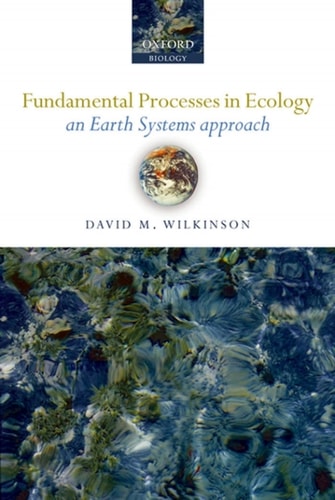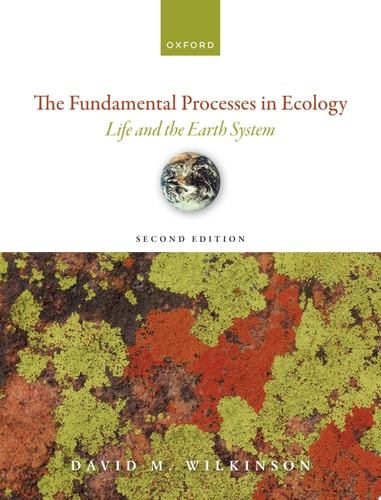
The Fundamental Processes in Ecology: Life and the Earth System
0
0
As an Amazon Associate and affiliate partner, Menrva Books earns from qualifying purchases. Learn more
Author Description
This thought-provoking book introduces a way to study ecosystems that is resonant with current thinking in the fields of earth system science, geobiology, and planetology. Instead of organizing the subject around a hierarchical series of entities (e.g. genes, individuals, populations, species, communities, and the biosphere), the book provides an alternative process-based approach and proposes a truly planetary view of ecological science. It demonstrates how the idea of fundamental ecological processes can be developed at the systems level, specifically their involvement in control and feedback mechanisms. This enables the reader to reconsider fundamental ecological processes such as energy flow, guilds, trade-offs, carbon cycling, and photosynthesis, and to put them in a global (and even planetary) context. In so doing, the book places a much stronger emphasis on microorganisms.Since publication of the first edition in 2006, ever growing societal concern about environmental sustainability has ensured that the earth system science/Gaian approach has steadily gained traction. Its integration with ecology is now more important than ever if ecological science is to effectively contribute to the massive problems and future challenges associated with global environmental change.The Fundamental Processes in Ecology is an accessible text for senior undergraduates, graduate student seminar courses, and researchers in the fields of ecology, environmental sustainability, earth system science, evolutionary biology, palaeontology, history of life, astrobiology, planetology, climatology, geology, and physical geography.
Menrva's Summary
THE THESIS
This book investigates whether a process-based approach to ecology, rather than a hierarchical entity-based model, provides a more effective framework for understanding the Earth as a complex system. David M. Wilkinson, an expert in ecological theory and the history of life, synthesizes concepts from geobiology and planetology to argue for a planetary perspective. By focusing on control and feedback mechanisms, the author provides a methodology for integrating ecological science with global environmental change research.
THE SCOPE MAP
What You Will Find
- Analysis of fundamental ecological processes including energy flow, carbon cycling, and photosynthesis.
- A systems-level framework for understanding ecological feedback loops.
- An emphasis on the role of microorganisms in global environmental stability.
Scope Limits
- The text does not focus on traditional hierarchical ecological studies such as population dynamics or community structure.
- It does not provide a comprehensive history of all ecological sub-disciplines.
THE AUTHORITY PERSPECTIVE
Experts and academics recognize this work as a significant contribution to the integration of ecology with earth system science. Readers frequently note the technical density of the prose, which is intended for advanced students and researchers in the environmental and biological sciences.
Page Count:
176
Publication Date:
2023-01-01
Publisher:
Oxford University Press
ISBN-10:
0192884646
ISBN-13:
9780192884640
Planetology
Evolutionary Biology
Ecology
Earth Science
Geobiology
Community Tags
Similar Books