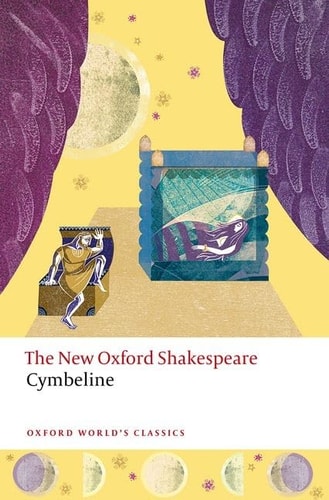
Cymbeline: The New Oxford Shakespeare
0
0
As an Amazon Associate and affiliate partner, Menrva Books earns from qualifying purchases. Learn more
Author Description
Cymbeline Was Probably Written, By Shakespeare Alone, In 1610, Just Before The Tempest. (see Authorship Companion, 379-81.) It Is One Of Sixteen Previously Unpublished Plays Entered In The Stationers' Register To Edward Blount And Isaac Jaggard On 8 November 1623. The Only Authoritative Text Was Published Soon After In Shakespeare's Comedies, Histories, And Tragedies, Now Known As The First Folio. Cymbeline Is The Last Play In That Big Book, And Therefore Last In The 'tragedies' Section, Where It Is Consistently Labelled 'the Tragedy Of Cymbeline'. But Most Scholars Agree That The Generic Label Is Misleading. Although The Evil Queen And Her Son Die, Cymbeline Does Not. This Fact Distinguishes Cymbeline From All Shakespeare Plays Printed In His Lifetime Which Were Called Tragedies On Their Title Pages, And Also Distinguishes It From The Ten Other 'tragedies' In The Folio Table Of Contents (called A 'catalogue'): In All Those Pre-cymbeline Tragedies, The Character(s) Named In The Title Die During The Play. Perhaps Cymbeline Appears Among The Tragedies Simply Because The Printer Did Not Acquire A Manuscript Until Most Of The Book Was Already Printed. Even The Folio Publishers Send A Mixed Message About Cymbeline's Title: The Catalogue Lists It As 'cymbeline King Of Britaine'. That Title Is Supported By The Only Known Reference To The Play During Shakespeare's Lifetime: Simon Forman, In His Private Manuscript Notebooks, Recorded His Memories Of Various Plays He Attended, Including What He Twice Called 'cimbalin King Of England'. Although 'england' (which Never Occurs In The Play) Is Certainly A Mistake For 'britain' (which Occurs More Often Here Than In All Shakespeare's Other Plays Combined), Forman Confirms The Structure Of The Title And Its Emphasis On British Royal History. The Catalogue's Phrase Goes Back To The Roman Historian Suetonius, Who Called Him 'brittanorum Rex', And The Emphasis On 'britain' Rather Than 'england' Would Have Appealed To King James I, The P
Menrva's Summary
THE PULSE
The central conflict arises when King Cymbeline, influenced by his malevolent Queen, banishes his daughter Imogen’s husband, Posthumus, triggering a complex web of betrayal, mistaken identity, and political intrigue. Imogen must navigate a treacherous court and the machinations of the Queen’s son, Cloten, while Posthumus is manipulated into believing his wife has been unfaithful. The narrative framework utilizes a blend of romance, history, and tragicomedy, moving between the British court and the wild landscapes of Wales. Characters are constrained by rigid social hierarchies and the shifting political tensions between Britain and Rome, forcing them to confront their own perceptions of loyalty and honor.
INSIDE THE PAGES
- Exploration of the tension between British identity and Roman influence
- Use of pastoral settings as a site for character transformation
- Complex subplots involving cross-dressing and disguise
- Examination of the nature of forgiveness and reconciliation
- Integration of supernatural elements and divine intervention
- Focus on the dynamics of royal power and familial duty
- Linguistic playfulness characteristic of late-period Shakespearean works
- Structural ambiguity that challenges traditional genre classification
THE COLLECTIVE ECHO
Discussion often centers on the play's resistance to traditional genre categorization, as it defies the strict boundaries between tragedy and comedy. Readers frequently highlight the complexity of Imogen as a protagonist, noting her resilience in the face of systemic betrayal. Critics often examine the play's late-period stylistic choices, which some describe as experimental and dense compared to earlier works. The atmosphere is frequently noted for its shifting tone, which moves rapidly from courtly intrigue to mythic resolution. This edition is particularly valued for its rigorous textual analysis and historical context, providing readers with a clearer understanding of the play's place within the First Folio.
Page Count:
224
Publication Date:
2025-05-13
Publisher:
Oxford University Press
ISBN-10:
0192882864
ISBN-13:
9780192882868
Drama
Plays
British History
Classical
Early Modern
Shakespeare
Dramas & Plays
Community Tags
Similar Books
Reader Comments
Share Your Thoughts
No comments yet. Be the first to share your thoughts!