Conservation of Wildlife Populations
0
0
As an Amazon Associate and affiliate partner, Menrva Books earns from qualifying purchases. Learn more
Author Description
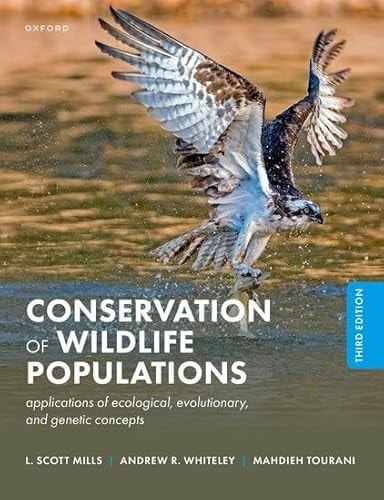
Applied Population Ecology Has Matured To A Sophisticated Science With Considerable Potential To Help Conserve Wild Populations In A Rapidly Changing World. And Yet, Much Of The Practical Power Of Wildlife Population Ecology Has Been Isolated In Specialized Texts And So Remains Underappreciated. This Third Edition Is A Major Revision Of Conservation Of Wildlife Populations. It Begins With Core Fundamentals Of Estimating, Describing, And Projecting Dynamics Of Fluctuating Populations, Including Varying Responses Across Individuals, Populations, Species, And Communities. It Then Covers The Intersection Of Population Dynamics With Genetic Structure, Predation, Inbreeding, Climate Change, Population Viability Analysis, Multiple Population Dynamics, Structured Decisionmaking, And Harvest. Quantitative Aspects And Non-intuitive Concepts Are Explained Throughout With Attention To Clarity And Applications. References And Case Studies Have Been Thoroughly Updated And Expanded In Global Scope, And Fish And Fisheries Are Now Included, But This Third Edition Maintains Its Readable And Approachable Style With One Voice (as Opposed To Edited Volumes). By The End Students Should Have The Confidence To Advance Both Conservation Management And Research By Effectively Using Scientific Data, Models, And The Literature To Address Pressing Questions. At The Same Time, Conservation Of Wildlife Populations (3rd Edition) Will Provide To Practitioners In The Field - In One Place And With Plenty Of Practical Examples - The Scientific Basis To Make Efficient And Effective Conservation Decisions Based On The Latest Advances In The Ecological, Evolutionary, And Genetic Aspects Of Population Ecology-- Provided By Publisher.
Menrva's Summary
THE THESIS
This text investigates how the principles of population ecology can be applied to effectively manage and conserve wildlife populations in an era of rapid environmental change. The authors, Andrew Whiteley, L. Scott Mills, and Mahdieh Tourani, synthesize complex ecological, evolutionary, and genetic data into a coherent framework for practitioners and students. By bridging the gap between theoretical models and field application, the book provides a structured methodology for addressing conservation challenges through quantitative analysis and informed decision-making.
THE SCOPE MAP
What You Will Find
- Core fundamentals of estimating, describing, and projecting population dynamics.
- Analysis of the intersection between population dynamics and factors like climate change, predation, and inbreeding.
- Practical applications of population viability analysis and structured decision-making.
- Updated global case studies including fish and fisheries management.
Scope Limits
- The text focuses primarily on population-level ecology rather than individual animal behavior or physiology.
- It assumes a foundational understanding of basic biological and statistical concepts.
THE AUTHORITY PERSPECTIVE
Experts and educators frequently highlight this text as a primary resource for bridging the gap between academic population ecology and field-based conservation management. Readers often note that the third edition maintains a consistent, accessible narrative voice that makes complex quantitative concepts manageable for students and practitioners alike.
Page Count:
320
Publication Date:
2026-01-23
Publisher:
Oxford University Press
ISBN-10:
0192898167
ISBN-13:
9780192898166
Science
Biology
Ecology
Environment
Genetics
Conservation
Evolution
Wildlife conservation
NATURE Ecology
Community Tags
Similar Books