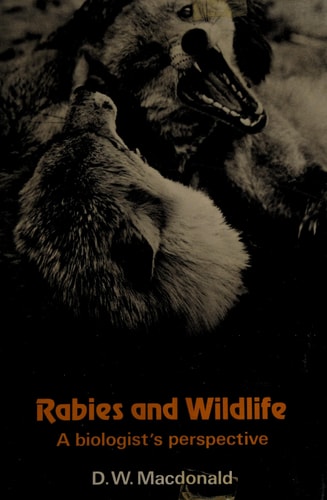
Rabies and Wildlife: A Biologist's Perspective
0
0
As an Amazon Associate and affiliate partner, Menrva Books earns from qualifying purchases. Learn more
Author Description
Canine rabies has long been controlled in most of the northern hemisphere but large wildlife reservoirs of the disease persist in Europe and North America and present a constant threat to humans and their domestic animals. Attempts to control wildlife rabies have had little general success and this book surveys what is known, and a great deal of what is not known, about this intractable problem, from the zoologist's viewpoint. The book is crammed with information both in text, figures and tables, some of which could have been omitted without detriment. An occasional passage would have benefited by more rigorous proof reading. Nevertheless, the book should find its way to the shelves of " vets ", zoologists, conserva-tionists and all interested in rabies. Whether it will make popular reading is another matter. G. S. Turner.
Menrva's Summary
THE THESIS
This book investigates the persistent challenge of wildlife rabies reservoirs in Europe and North America and the limitations of current control strategies. David Whyte MacDonald, a noted zoologist, synthesizes existing scientific knowledge regarding the disease's transmission dynamics within wild populations. The text serves as a comprehensive examination of the ecological and biological factors that render rabies an intractable public health concern, despite successful eradication efforts in domestic canine populations.
THE SCOPE MAP
What You Will Find
- Analysis of wildlife rabies reservoirs in the northern hemisphere
- Evaluation of historical and contemporary disease control methodologies
- Data-driven assessment of transmission patterns in wild animal populations
- Examination of the intersection between wildlife ecology and veterinary public health
THE AUTHORITY PERSPECTIVE
Experts identify this work as a significant resource for veterinarians, conservationists, and biologists involved in disease management. While some reviewers note the density of the technical data and occasional editorial inconsistencies, it remains a foundational text for understanding the complexities of wildlife rabies.
Page Count:
151
Publication Date:
1980-01-01
Publisher:
Oxford Univ Pr
ISBN-10:
019857567X
ISBN-13:
9780198575672
Science
Ecology
Rabies in animals -- Prevention
Biology
Zoology
Zoonoses
Foxes
Public Health
Veterinary Medicine
Community Tags
Similar Books