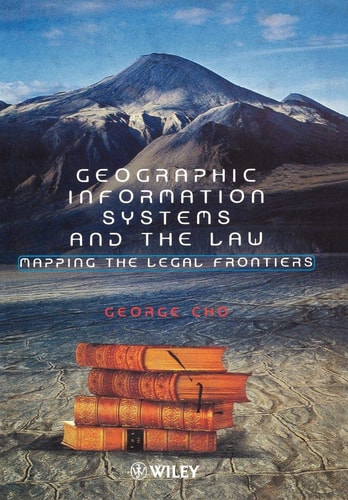
Geographic Information Systems and the Law: Mapping the Legal Frontiers
0
0
As an Amazon Associate and affiliate partner, Menrva Books earns from qualifying purchases. Learn more
Author Description
By the millennium most government departments and businesses willrely on some sort of GIS to conduct their everyday activities. Thepower and speed of such a tool in planning, research and managingspatial databases is invaluable. However, it is becomingincreasingly apparent that the legal implications of GIS are asconvoluted as those raised by the Internet. This is alreadybecoming a field which is stretching legal systems around the worldto their limit. Users, practitioners, developers, and custodians ofdata need a clear guide. This book, avoiding technological andlegal jargon, clarifies the issues of the rights, limitations, andresponsibilities of GIS. Geographic Information Systems and the Lawaddresses the legal relations between those who provide data andthose who use the data. Areas covered include: * the legal regimes and economic aspects of GIS * contract law governing information technology * data and information in a digital age * legal liabilities -- damages, negligence, and standards ofcare * public access and ownership of information * privacy and security issues -- intellectual property andcopyright * international law and the globalisation of informationtechnology The analysis is illustrated by an international range of casematerial from the United Kingdom, the United States, Australia andNew Zealand. Geography / Information Studies / Law
Menrva's Summary
THE THESIS
The increasing reliance on Geographic Information Systems (GIS) by governments and businesses presents complex legal challenges that are stretching existing legal frameworks. The book aims to provide a clear guide for users, practitioners, developers, and data custodians by clarifying the rights, limitations, and responsibilities associated with GIS, avoiding technical and legal jargon. It addresses the legal relationships between data providers and users, exploring areas such as legal regimes, contract law, data in the digital age, liabilities, public access, privacy, security, and international law. The analysis is supported by international case material.
THE SCOPE MAP
- The legal regimes and economic aspects of GIS
- Contract law governing information technology
- Data and information in a digital age
- Legal liabilities: damages, negligence, and standards of care
- Public access and ownership of information
- Privacy and security issues: intellectual property and copyright
- International law and the globalization of information technology
THE AUTHORITY PERSPECTIVE
The book addresses the growing legal complexities surrounding Geographic Information Systems (GIS), a topic that is becoming increasingly relevant as these systems become integral to governmental and business operations. It aims to demystify these issues for a broad audience by avoiding specialized jargon. The inclusion of international case material suggests a comprehensive approach to understanding the global implications of GIS law. The book's focus on rights, limitations, and responsibilities positions it as a practical guide for professionals navigating this evolving legal landscape.
Page Count:
358
Publication Date:
1998-09-16
Publisher:
Wiley
ISBN-10:
0471948578
ISBN-13:
9780471948575
Politics
Non-Fiction
Science & Technology
Technology
Law
Information Studies
Community Tags
Similar Books