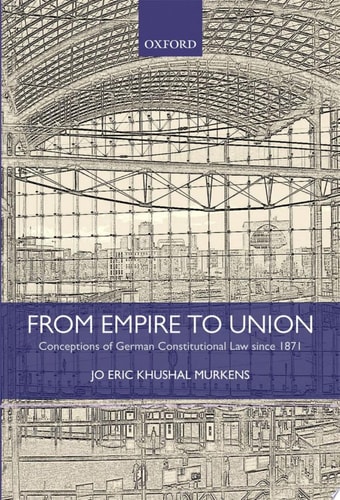
From Empire to Union
0
0
As an Amazon Associate and affiliate partner, Menrva Books earns from qualifying purchases. Learn more
Author Description
Germany Has Long Been At The Centre Of European Debates Surrounding The Modern Role Of National Constitutional Law And Its Relationship With Eu Law. In 2009 The German Constitutional Court Voted To Uphold The Constitutionality Of The Lisbon Treaty, But Its Critical, Restrictive Decision Sent Shockwaves Through The European Legal Community Who Saw Potential Threats To Further European Integration. What Explains Germany's Uneasy Relationship With The Project Of European Legal Integration? How Have The Concepts Of Sovereignty, State, People, And Democracy Come To Dominate The Constitutional Court's Thinking, Despite Not Being Defined In The Constitution Itself? Despite Its Importance To The Whole Enterprise Of The European Union, German Constitutional Thought Has Been Poorly Understood In The Wider European Literature. This Book Presents A Historical Account Of German Conceptions Of Constitutional Law, Providing The Understanding Necessary To See What Is At Stake In Contemporary Debates Surrounding The Constitution And The European Union. Examining The Modern Development Of German Constitutional Thought, This Volume Traces The Key Public Law Concepts Of State, Constitution, Sovereignty, And Democracy From Their Modern Emergence In The 19th Century Through To The Present Day. It Analyses The Constitutional Relationship Between Germany And The Eu From A Sociological And Historical Perspective, Looking At How German Constitutional Law Has Conflicted And Compromised With Eu Law, And The Difficulties This Has Raised. Filling A Significant Gap In Comparative Constitutional Law Literature, This Book Provides An Account Of The Major Schools Of German Constitutional Thought And Their Development. Against This Backdrop It Offers A Fascinating Insight Into Germany's Relationship With The European Union.
Menrva's Summary
THE THESIS
This book investigates the historical and sociological origins of German constitutional thought to explain the country's complex and often restrictive relationship with European Union legal integration. Jo Eric Khushal Murkens, a scholar of law, utilizes a historical framework to trace the evolution of core concepts such as sovereignty, the state, and democracy from the 19th century to the present. By analyzing the German Constitutional Court's jurisprudence, the author argues that these foundational ideas, though undefined in the German Basic Law, dictate the nation's cautious approach to supranational legal authority.
THE SCOPE MAP
What You Will Find
- A historical analysis of German public law concepts from the 19th century to the modern era.
- An examination of the 2009 Lisbon Treaty ruling by the German Constitutional Court.
- A sociological perspective on the conflict between national constitutional mandates and EU legal requirements.
Scope Limits
- The text focuses primarily on German constitutional theory and does not provide an exhaustive legal analysis of every EU member state's constitutional framework.
THE AUTHORITY PERSPECTIVE
Scholars and legal professionals recognize this work as a critical resource for understanding the intellectual underpinnings of German judicial resistance to European integration. Readers frequently note the academic density of the prose, which provides a necessary bridge for non-German speakers to grasp the nuances of the Karlsruhe court's reasoning.
Page Count:
272
Publication Date:
2013-01-01
Publisher:
Oxford University Press
ISBN-10:
0191652008
ISBN-13:
9780191652004
History
Law
International relations
European History
Constitutional Law
German history
Community Tags
Similar Books