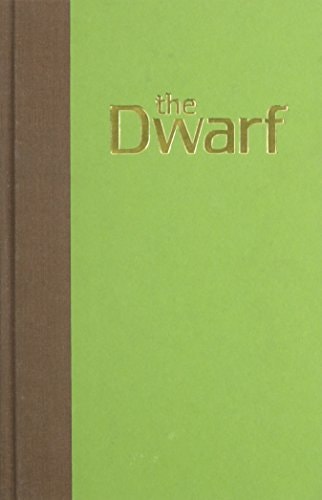
The Dwarf
0
0
As an Amazon Associate and affiliate partner, Menrva Books earns from qualifying purchases. Learn more
Author Description
The dark side of South Korea's economic miracle emerges in The Dwarf, Cho Se-hui's enormously popular and critically acclaimed work. First published in 1978, it speaks to the painful social costs of reckless industrialization, even as it tellingly portrays the spiritual malaise of the newly rich and powerful and a working class subject to forces beyond its control. Cho's lean, clipped, deceptively simple style, the rapidly shifting points of view, terse dialogue, and subtle irony evoke the particularities of life in 1970s South Korea in the presence of global economic forces. The desperate realities of life for the dwarf, the proverbial little guy upon whose back Korea's economic transformation largely took place, are emotively rendered in twelve linked stories examining the lives of a laboring family, a family of the newly emerging middle class, and that of a wealthy industrialist.
Menrva's Summary
THE PULSE
A dwarf named Cheol struggles to survive and find meaning amidst the rapid industrialization and stark social inequalities of 1970s South Korea. The narrative follows Cheol and his family, representing the exploited working class, as they navigate a society transformed by economic growth that benefits the wealthy elite. Opposing them are the systemic forces of unchecked capitalism, the spiritual emptiness of the nouveau riche, and the crushing weight of societal indifference. The stories are linked, employing a rapidly shifting point of view and terse dialogue to capture the fragmented reality of their lives.
INSIDE THE PAGES
- Twelve linked stories exploring the lives of three families: a laboring family, a middle-class family, and a wealthy industrialist's family.
- Focus on the social and spiritual costs of South Korea's rapid economic development.
- Characterization of the 'newly rich' and the working class subject to forces beyond their control.
- Exploration of the 'dark side' of economic progress.
- Use of a lean, clipped, and deceptively simple writing style.
- Rapidly shifting points of view to reflect fragmented experiences.
- Inclusion of terse dialogue and subtle irony.
- Evocation of the specific atmosphere of 1970s South Korea under global economic pressures.
THE COLLECTIVE ECHO
The Dwarf is widely recognized as a seminal work of modern Korean literature, lauded for its powerful critique of the social consequences of rapid industrialization. Critics have praised Cho Se-hui's distinctive, minimalist prose and innovative narrative structure for their effectiveness in portraying the struggles of the marginalized. The novel's enduring popularity speaks to its resonant themes of economic disparity and spiritual malaise, which continue to engage readers decades after its initial publication. Its critical acclaim highlights its significance in capturing a pivotal, often painful, period in South Korean history.
Page Count:
248
Publication Date:
2007-01-01
Publisher:
University of Hawaii Press
ISBN-10:
0824829409
ISBN-13:
9780824829407
Fiction
Literary Fiction
Social Commentary
Short Stories
Asian
Community Tags
Similar Books