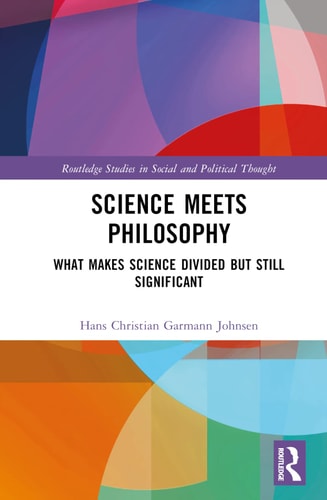
Science Meets Philosophy: What Makes Science Divided But Still Significant
0
0
As an Amazon Associate and affiliate partner, Menrva Books earns from qualifying purchases. Learn more
Author Description
The book is an attempt to bring together what are often seen as incommensurable scientific and philosophical positions. Its core argument is that a main reason for the divisions about what constitutes scientific knowledge relates to disagreements on philosophical issues. The book explores what these disagreements are about, and to discuss whether they can be overcome. Taking a historical perspective, the book traces the divides in science back to three main philosophical traditions: realism, idealism, and scepticism. It maps how these have inspired three main current positions in science: logical empiricism, phenomenology, and sociology of scientific knowledge. The book is intended for a general audience concerned with today's debates on scientific knowledge and society. It will be useful for students and researchers studying philosophy of science, sociology of scientific knowledge, realism, phenomenology, positivism, logical empiricism, analytical philosophy, and sustainable scientific knowledge
Menrva's Summary
THE THESIS
This book investigates the philosophical roots of divisions within scientific knowledge and explores their potential resolution. The author, Hans Chr. Garmann Johnsen, argues that fundamental disagreements in philosophical traditions—realism, idealism, and skepticism—underlie the fragmentation observed in contemporary science. By tracing these historical philosophical divides, the book examines how they manifest in current scientific positions such as logical empiricism, phenomenology, and the sociology of scientific knowledge. It aims to clarify these disputes and assess the possibility of overcoming them to foster more unified scientific understanding.
THE SCOPE MAP
- Exploration of the incommensurability between scientific and philosophical positions.
- Core argument that philosophical disagreements are a primary cause of divisions in scientific knowledge.
- Historical perspective tracing scientific divides to realism, idealism, and skepticism.
- Mapping of how these philosophical traditions inspire current scientific positions: logical empiricism, phenomenology, and sociology of scientific knowledge.
- Discussion on whether these philosophical disagreements can be overcome.
- Intended for a general audience interested in contemporary debates on science and society.
- Usefulness for students and researchers in philosophy of science, sociology of scientific knowledge, and related fields.
- Consideration of sustainable scientific knowledge.
THE AUTHORITY PERSPECTIVE
The book is positioned as an accessible exploration of complex philosophical debates that underpin scientific divisions. Its historical approach and focus on key traditions like realism, idealism, and skepticism suggest a text that aims to provide clarity for a broad audience concerned with the nature of scientific knowledge. The author's intent to bridge perceived gaps between scientific and philosophical thought indicates a work that seeks to foster dialogue and understanding in contemporary discussions about science and its societal implications.
Page Count:
0
Publication Date:
2023-01-01
Publisher:
Routledge, Taylor & Francis Group
ISBN-10:
1003326870
ISBN-13:
9781003326878
Non-Fiction
Science
Philosophy
Skepticism
Realism
Idealism
Analytical Philosophy
Phenomenology
Community Tags
Similar Books