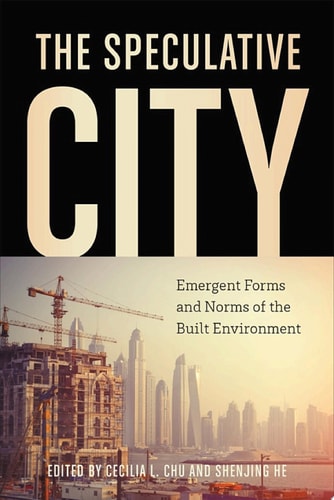
The Speculative City
0
0
As an Amazon Associate and affiliate partner, Menrva Books earns from qualifying purchases. Learn more
Author Description
The Speculative City explores property speculation as a key aspect of financialization and its role in reshaping the contemporary built environment. The book offers a series of case studies that encompass a range of cities whose urban fabrics have undergone significant transformation in recent years. While the forms of these developments shared many similarities, their trajectories and social outcomes were contingent upon existing planning and policy frameworks and the historical roles assumed by the state and the private sector in housing and welfare provision. By paying close attention to the forces and actors involved in property development, this book underscores that the built environment has played an integral part in the shaping of new values and collective aspirations while facilitating the spread of financial logics in urban governance. It also shows that these dynamics represent a larger shift of politics and culture in the ongoing production of urban space and prompts reflections on future trajectories of finance-led property speculation.
Menrva's Summary
THE THESIS
The Speculative City investigates the pervasive influence of property speculation on the modern urban landscape. The book examines how financialization, driven by property speculation, fundamentally alters contemporary built environments. Through a series of detailed case studies across various cities experiencing recent transformations, it analyzes how existing planning, policy, and the historical roles of the state and private sector shape diverse social outcomes. The work highlights the built environment's crucial role in forging new values and aspirations, while also demonstrating how financial logics are integrated into urban governance, signaling broader shifts in urban politics, culture, and the ongoing production of urban space.
THE SCOPE MAP
- Case studies of cities undergoing significant urban transformation due to property speculation.
- Analysis of how planning and policy frameworks influence speculative development outcomes.
- Examination of the historical roles of the state and private sector in housing and welfare provision.
- Exploration of how the built environment shapes new values and collective aspirations.
- Discussion of the integration of financial logics into urban governance.
- Reflection on the broader shifts in politics and culture within urban space production.
- Consideration of future trajectories for finance-led property speculation.
THE AUTHORITY PERSPECTIVE
The book is positioned as a critical examination of property speculation's impact on urban development. Its detailed case studies and analysis of policy frameworks suggest a rigorous academic approach, likely appealing to scholars and professionals in urban studies, planning, and finance. The work's focus on the interplay between financial logics, governance, and the built environment indicates a contribution to understanding contemporary urban transformations. It prompts reflection on the socio-political and cultural implications of finance-led development.
Page Count:
282
Publication Date:
2022-01-27
Publisher:
University of Toronto Press
ISBN-10:
1487535767
ISBN-13:
9781487535766
Politics
Non-Fiction
Economics
Sociology
urban planning
Real Estate
Finance
Urban Studies
Community Tags
Similar Books